At the 1900 Paris World’s Fair, which became a triumph of Russian industry and culture, astonished visitors admired not only the watercolor panorama of the Trans-Siberian Railway (950 metres long!), the openwork Kasli casting, and the map of France made from Ural gemstones. They were equally captivated by the unprecedented ancient Russian costumes from Natalia Shabelskaya’s collection, displayed on mannequins amid artifacts of Russian antiquity. This was a Russia foreignershad never seen before.
Precursor to Diaghilev’s Ballets Russes and the famous Romanov costume ball
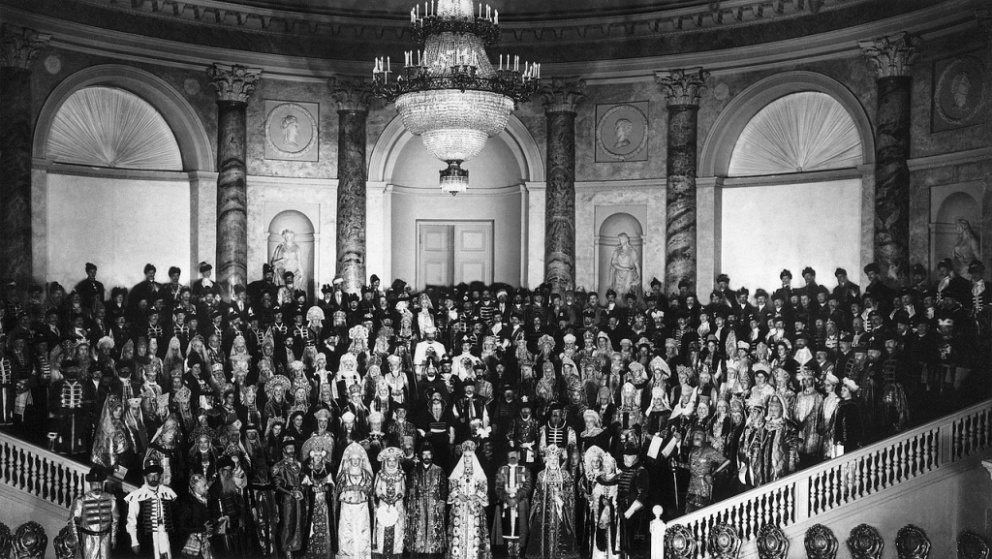
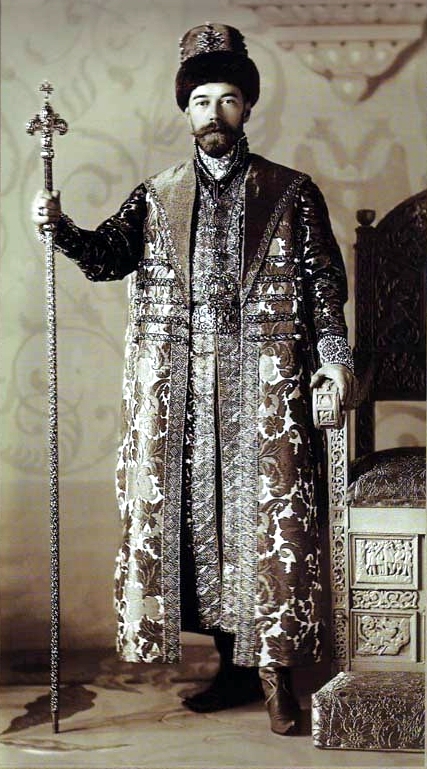
Many are surely familiar with the photographs from the famous 1903 costume ball at the Winter Palace - the most celebrated masquerade ball of imperial Russia. All the courtiers were instructed to attend the event in Russian attire from the pre-Petrine era. The result was the spectacle of extraordinary opulence and beauty - truly fairytale-like. Emperor Nicholas II chose a costume based on designs depicting the garments of Tsar Alexei Mikhailovich, yet many of the pieces he wore were authentic, delivered from the Kremlin Armoury; his wife was dressed as Tsarina Maria Miloslavskaya.
The Winter Palace filled with boyars and boyarynyas, falconers, stolniks, and voyevodas. The requirements for the costumes were extremely strict - no artistic license was allowed; only authentic attire from that era would do. As a result, the ball became not merely an extraordinary spectacle but something akin to a unique work of art. The photographs capturing the event’s guests continue to evoke fascination and admiration for the remarkable beauty of the Russian costumes. Incidentally, the well-known deck of cards Russian Style, which many of us used to play with as children, reproduces the costumes from this very ball.
Precursor to Diaghilev’s Ballets Russes and the famous Romanov costume ball
Many are surely familiar with the photographs from the famous 1903 costume ball at the Winter Palace - the most celebrated masquerade ball of imperial Russia. All the courtiers were instructed to attend the event in Russian attire from the pre-Petrine era. The result was the spectacle of extraordinary opulence and beauty - truly fairytale-like. Emperor Nicholas II chose a costume based on designs depicting the garments of Tsar Alexei Mikhailovich, yet many of the pieces he wore were authentic, delivered from the Kremlin Armoury; his wife was dressed as Tsarina Maria Miloslavskaya.
The Winter Palace filled with boyars and boyarynyas, falconers, stolniks, and voyevodas. The requirements for the costumes were extremely strict - no artistic license was allowed; only authentic attire from that era would do. As a result, the ball became not merely an extraordinary spectacle but something akin to a unique work of art. The photographs capturing the event’s guests continue to evoke fascination and admiration for the remarkable beauty of the Russian costumes. Incidentally, the well-known deck of cards Russian Style, which many of us used to play with as children, reproduces the costumes from this very ball.
And in a sense, Natalia Shabelskaya had a hand in all of this. She was the first to collect and study objects of ancient Russian daily life and clothing. In the Museum of Antiquities she founded, more than 20,000 items were gathered! One could say that her collection, which drew admiration from audiences at exhibitions in Moscow, St. Petersburg, Chicago, Antwerp, and, of course, Paris, became the precursor to both the immense popularity of Diaghilev’s Ballets Russes and that famous Romanov costume ball. She was the one who ushered in the fashion for the Russian style.
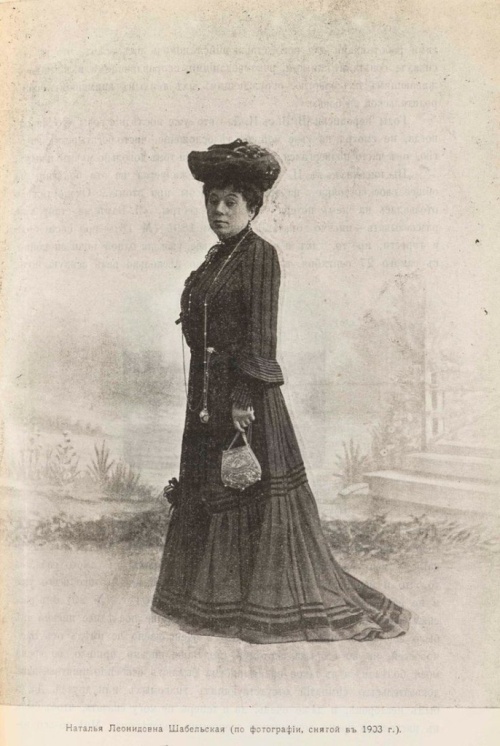
Natalia Leonidovna Shabelskaya was born in 1841 in Taganrog into a family of Russified German nobles, the Kronenbergs. She received an excellent home education and later graduated with a gold medal from the Kharkov Women’s Institute. At the age of seventeen, she married Pyotr Shabelsky, one of the wealthiest landowners in Kharkov Province. Passionate about needlework since childhood, she opened a workshop on her husband’s estate, where she gathered fourteen talented embroideresses.
After the birth of their third daughter, the family moved to Moscow, where they could provide the children with a good education. Natalia Leonidovna’s interest in embroidery quickly grew into a fascination with folk art in general. Fortunately, she became part of the Moscow circle of antiquarians and collectors who cherished the old ways. The well-known collector and patron of the arts Alexei Bakhrushin, a frequent guest at the Shabelskys’ home, wrote about her embroidery workshop: “She creates works using ancient Russian stitches and traditional patterns solely out of love for art. The items produced in this way find their way to the Imperial Court and are given as gifts to close friends.”
After the birth of their third daughter, the family moved to Moscow, where they could provide the children with a good education. Natalia Leonidovna’s interest in embroidery quickly grew into a fascination with folk art in general. Fortunately, she became part of the Moscow circle of antiquarians and collectors who cherished the old ways. The well-known collector and patron of the arts Alexei Bakhrushin, a frequent guest at the Shabelskys’ home, wrote about her embroidery workshop: “She creates works using ancient Russian stitches and traditional patterns solely out of love for art. The items produced in this way find their way to the Imperial Court and are given as gifts to close friends.”
In the late 1870s, a series of tragic events struck Shabelskaya’s life: one after another, she lost her eldest daughter, her mother, her sister, and her husband.
Perhaps in order not to break down and to avoid leaving her two remaining daughters as orphans, she threw herself headlong into her fascination with Russian antiquities. This passion was further fuelled by a journey she took with her daughters along the Volga River, during which they visited the famous Nizhny Novgorod Fair. The works of unknown Russian craftswomen from all over the vast country, their artistic taste, intricate handcraft techniques, and traditional patterns captivated Shabelskaya. They awakened in her a sincere desire not only to introduce this beauty to the upper circles of Russian society but also to preserve these masterpieces of ancient Russian art for future generations.
20,000 unique items of Russian antiquity
From this moment on, Natalia Leonidovna became a passionate and tireless collector. In search of items that interested her, she travelled to the Russian North, the Volga region, Crimea, the southern provinces, and the central regions of the Russian Empire. The problem was that the most valuable examples of Russian antiquities were being exported abroad in large quantities, while many others were simply burned by rag-and-bone men to extract the gold and silver embroidery. As a result, priceless patterns and the artefacts themselves were disappearing without a trace, as Shabelskaya noted in one of her letters.
And yet, over several decades she managed to assemble a truly unique collection of Russian folk art and everyday objects. At the heart of her collection was the traditional Russian costume: kaftans, half-kaftans, sarafans, shirts, dushegreys (short sleeveless jackets), and epanchas (long cloaks). She had no fewer than three hundred women's headpieces alone: povyazki, perevyazki, crowns, wedding koruny, kichki, nachelniki, soroki, povoiki, and numerous types of kokoshniks adorned with pearls and mother-of-pearl. There were also shawls, veils, and scarves, including gold-woven and gold-embroidered pieces from various Russian provinces, each distinguished by its own decorative features.
Perhaps in order not to break down and to avoid leaving her two remaining daughters as orphans, she threw herself headlong into her fascination with Russian antiquities. This passion was further fuelled by a journey she took with her daughters along the Volga River, during which they visited the famous Nizhny Novgorod Fair. The works of unknown Russian craftswomen from all over the vast country, their artistic taste, intricate handcraft techniques, and traditional patterns captivated Shabelskaya. They awakened in her a sincere desire not only to introduce this beauty to the upper circles of Russian society but also to preserve these masterpieces of ancient Russian art for future generations.
20,000 unique items of Russian antiquity
From this moment on, Natalia Leonidovna became a passionate and tireless collector. In search of items that interested her, she travelled to the Russian North, the Volga region, Crimea, the southern provinces, and the central regions of the Russian Empire. The problem was that the most valuable examples of Russian antiquities were being exported abroad in large quantities, while many others were simply burned by rag-and-bone men to extract the gold and silver embroidery. As a result, priceless patterns and the artefacts themselves were disappearing without a trace, as Shabelskaya noted in one of her letters.
And yet, over several decades she managed to assemble a truly unique collection of Russian folk art and everyday objects. At the heart of her collection was the traditional Russian costume: kaftans, half-kaftans, sarafans, shirts, dushegreys (short sleeveless jackets), and epanchas (long cloaks). She had no fewer than three hundred women's headpieces alone: povyazki, perevyazki, crowns, wedding koruny, kichki, nachelniki, soroki, povoiki, and numerous types of kokoshniks adorned with pearls and mother-of-pearl. There were also shawls, veils, and scarves, including gold-woven and gold-embroidered pieces from various Russian provinces, each distinguished by its own decorative features.
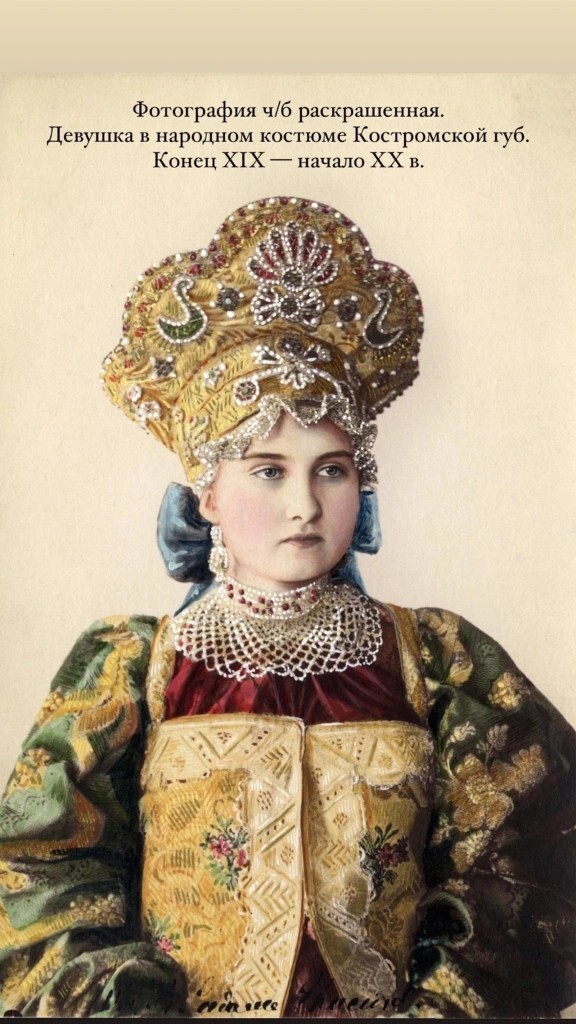
Shabelskaya’s collection also included all types of ancient Russian sewing and lace-making: silk embroidery, embroidery on canvas, embroidery on perevit, gold embroidery, and many other stitching techniques. However, her collection went far beyond clothing. It encompassed icons, antique caskets in which women once kept their jewels, the jewellery itself, and pieces of antique furniture from the women’s quarters of traditional homes - small needlework tables, mirrors with stands, and chests of drawers.
The collection of Natalia Shabelskaya was first presented in its most complete form at an exhibition in St. Petersburg held in aid of those suffering from the crop failure. The exhibition was visited by the art critic and historian Vladimir Vasilyevich Stasov, who highly praised Shabelskaya’s artistic taste, her knowledge, and her significance for Russian culture. Stasov left a brilliant review of the exhibition, in which he wrote: “Everything at this exhibition delights me: the collection of superb works created by the ancient Russian woman, the extraordinary female initiative, the remarkable knowledge shown by a modern Russian woman, and the exceptional energy of the collector who devoted twenty years of her life to gather from every corner of Russia and unite in her museum the examples of artistic labour and domestic creativity of countless generations of ancient Russian women.” He called Shabelskaya a representative of a new generation of women who “clearly feel what our nationality is, passionately love it, and have devoted their entire lives to its service.”
The collection of Natalia Shabelskaya was first presented in its most complete form at an exhibition in St. Petersburg held in aid of those suffering from the crop failure. The exhibition was visited by the art critic and historian Vladimir Vasilyevich Stasov, who highly praised Shabelskaya’s artistic taste, her knowledge, and her significance for Russian culture. Stasov left a brilliant review of the exhibition, in which he wrote: “Everything at this exhibition delights me: the collection of superb works created by the ancient Russian woman, the extraordinary female initiative, the remarkable knowledge shown by a modern Russian woman, and the exceptional energy of the collector who devoted twenty years of her life to gather from every corner of Russia and unite in her museum the examples of artistic labour and domestic creativity of countless generations of ancient Russian women.” He called Shabelskaya a representative of a new generation of women who “clearly feel what our nationality is, passionately love it, and have devoted their entire lives to its service.”
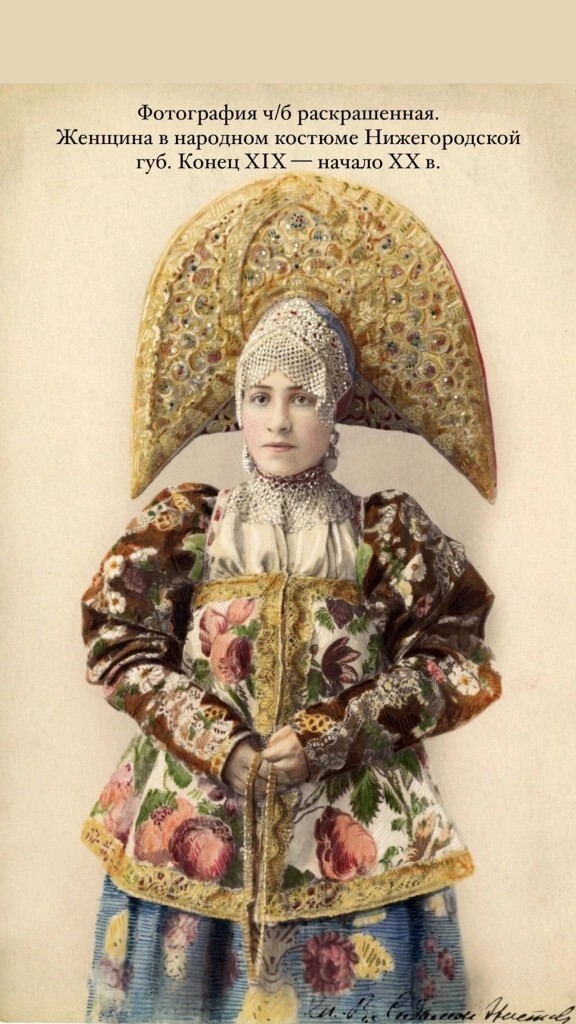
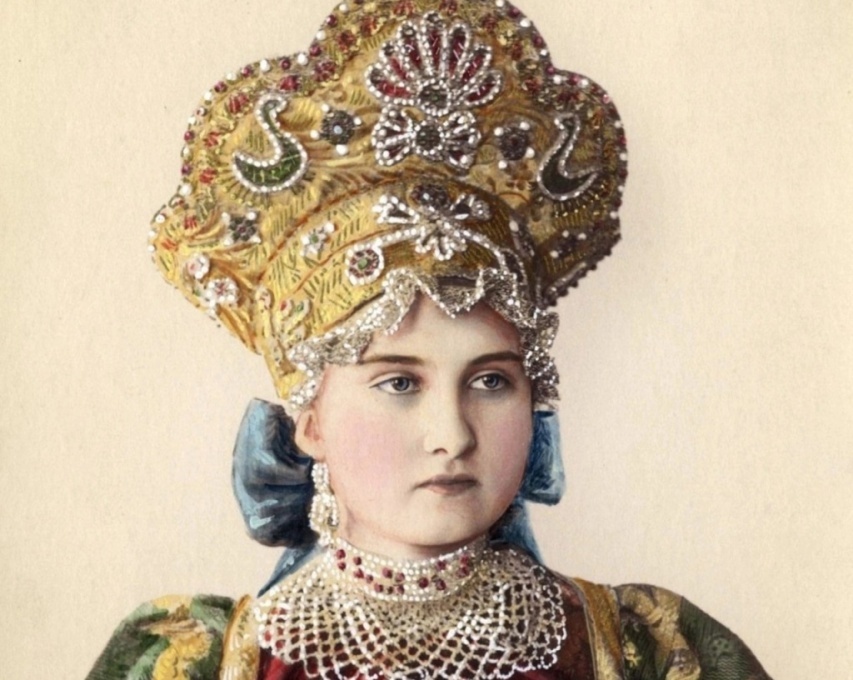
Hand-coloured black-and-white photograph.
A woman in a folk costume from Nizhny Novgorod province.
Late 19th – early 20th century.
A woman in a folk costume from Nizhny Novgorod province.
Late 19th – early 20th century.
Then, in the early 1890s, Natalia Shabelskaya opened a rich and varied "Museum of Antiquities" in her Moscow mansion on the corner of Sadovaya and Bronnaya streets. She also began actively exhibiting her collection both at home and abroad - at the Chicago Exhibition in 1893, in Antwerp in 1894, and at the Paris World's Fair in 1900.
Interestingly, Shabelskaya seemed to have grasped, earlier than anyone else, what would soon become - if not a fashion - then a serious passion of the Russian nobility. Since the reforms of Peter the Great, the Russian elite had become accustomed to looking exclusively to European models for their tastes. The distinctive and unique nature of Russian culture was known only to a few scholars such as Lomonosov and to great figures of Russian culture like Pushkin.
However, everything changed when Alexander III ascended the throne in 1881. For the first time, the Russian tsar began to actively promote the national style in all its forms - in painting, architecture, and even in restaurant cuisine. Alexander III acquired around a thousand works by Russian artists, primarily the Wanderers (the Peredvizhniki). For Konstantin Makovsky’s painting «The Appearance of Christ before the People», which he particularly patronized, he paid the enormous sum (for that time) of 15,000 silver roubles. The historian Vasily Klyuchevsky wrote that Alexander “encouraged and elevated Russian historical thought and Russian national consciousness.” Thus, Natalia Shabelskaya’s collection found favour at court in the broadest sense of the word.
But her activities were not limited to collecting alone. As if anticipating the tragic events that would soon befall Russia, Natalia Shabelskaya decided to undertake the photographic documentation of her collection. Both of her daughters - Natalia and Varvara - assisted her in this endeavour. They photographed the embroideresses from Shabelskaya’s workshop wearing traditional Russian costumes, posed as models themselves, and then hand-coloured the photographs so that future viewers could appreciate all the nuances of the ancient Russian style. This photographic collection of 175 images became a unique source in its own right for the history of Russian costume. Importantly, the majority of it - 118 photographs - remained in Russia and is now preserved in the archive of the Russian Ethnographic Museum. Incidentally, on 18 April an exhibition from the series “The Russians. The Birth of Identity” opens there, featuring items including pieces from Shabelskaya’s collection.
Interestingly, Shabelskaya seemed to have grasped, earlier than anyone else, what would soon become - if not a fashion - then a serious passion of the Russian nobility. Since the reforms of Peter the Great, the Russian elite had become accustomed to looking exclusively to European models for their tastes. The distinctive and unique nature of Russian culture was known only to a few scholars such as Lomonosov and to great figures of Russian culture like Pushkin.
However, everything changed when Alexander III ascended the throne in 1881. For the first time, the Russian tsar began to actively promote the national style in all its forms - in painting, architecture, and even in restaurant cuisine. Alexander III acquired around a thousand works by Russian artists, primarily the Wanderers (the Peredvizhniki). For Konstantin Makovsky’s painting «The Appearance of Christ before the People», which he particularly patronized, he paid the enormous sum (for that time) of 15,000 silver roubles. The historian Vasily Klyuchevsky wrote that Alexander “encouraged and elevated Russian historical thought and Russian national consciousness.” Thus, Natalia Shabelskaya’s collection found favour at court in the broadest sense of the word.
But her activities were not limited to collecting alone. As if anticipating the tragic events that would soon befall Russia, Natalia Shabelskaya decided to undertake the photographic documentation of her collection. Both of her daughters - Natalia and Varvara - assisted her in this endeavour. They photographed the embroideresses from Shabelskaya’s workshop wearing traditional Russian costumes, posed as models themselves, and then hand-coloured the photographs so that future viewers could appreciate all the nuances of the ancient Russian style. This photographic collection of 175 images became a unique source in its own right for the history of Russian costume. Importantly, the majority of it - 118 photographs - remained in Russia and is now preserved in the archive of the Russian Ethnographic Museum. Incidentally, on 18 April an exhibition from the series “The Russians. The Birth of Identity” opens there, featuring items including pieces from Shabelskaya’s collection.
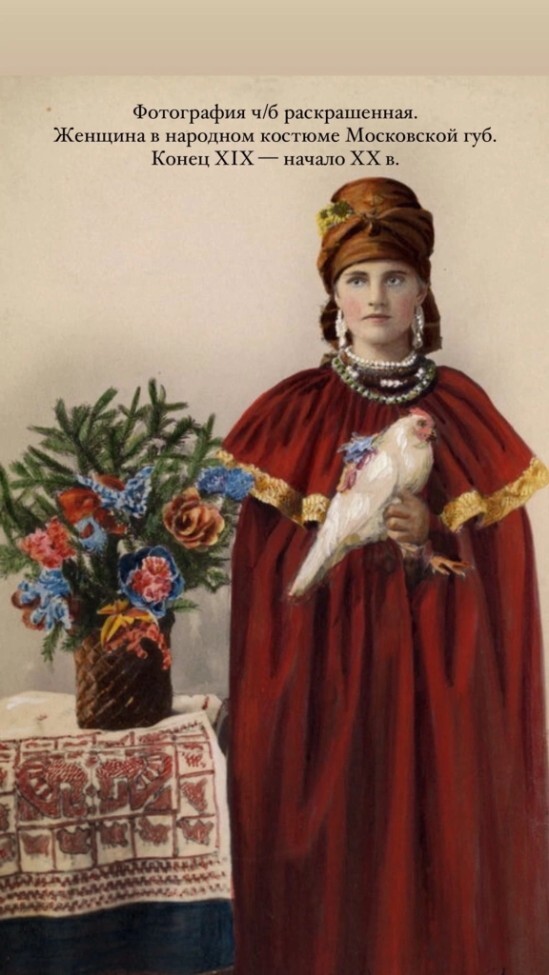
After the death of the collection’s founder, her daughters did everything possible to ensure that the unique exhibits would not be lost, but instead become part of a museum’s heritage. Almost immediately after their mother’s death in 1904, the Shabelsky sisters approached the Ethnographic Department of the Russian Museum in St. Petersburg with a proposal to acquire the collection, which included items of women’s clothing, headdresses, lace, objects made of wood and bone, as well as jewellery made of pearls and beads. Part of the collection (1,478 pieces) was donated by the sisters to the museum, while a further 2,596 were purchased by Emperor Nicholas II for 40,000 gold roubles, to be paid in instalments over five years, and then presented to the Russian Museum.
«A terrible longing for home is suffocating us»
After the 1917 Revolution, the sisters initially chose different paths. Varvara emigrated to France with her family, while Natalia remained in Moscow, where she worked at the Central restoration workshops under the artist Igor Grabar. However, in 1925 she left for Nice, where she joined her sister. A part of their mother’s collection also remained in Nice, as she had spent her final years in this coastal city.
The sisters earned their living by creating, from their own sketches, Russian-style dress trimmings for the collections of the famous Parisian couturier Paul Poiret. They hoped they might still return to their homeland and even bring out the remaining part of the collection. At least, this is what one of the sisters, Natalia, wrote to Igor Grabar: “A terrible longing for home is suffocating us and gives us no peace. We would undoubtedly like to return to Moscow.” But these dreams were never to come true. The sisters passed away one after the other shortly after the outbreak of the Second World War.
Part of their foreign collection was sold to the United States, while another part remained with a long-time family friend. In 1988, these items were bought by the Russian émigré Pavel Tolstoy-Miloslavsky, who in 1991 donated them to the All-Russian Museum of Decorative Art.
Today, these objects and photographs inspire wonder and admiration for their elegance and the complexity of their workmanship, reaffirming the words of Natalia Shabelskaya: “In all the surviving monuments of embroidery - ancient, worn, and seemingly outworn - there is a living force: the force of beauty and individual creativity.”
«A terrible longing for home is suffocating us»
After the 1917 Revolution, the sisters initially chose different paths. Varvara emigrated to France with her family, while Natalia remained in Moscow, where she worked at the Central restoration workshops under the artist Igor Grabar. However, in 1925 she left for Nice, where she joined her sister. A part of their mother’s collection also remained in Nice, as she had spent her final years in this coastal city.
The sisters earned their living by creating, from their own sketches, Russian-style dress trimmings for the collections of the famous Parisian couturier Paul Poiret. They hoped they might still return to their homeland and even bring out the remaining part of the collection. At least, this is what one of the sisters, Natalia, wrote to Igor Grabar: “A terrible longing for home is suffocating us and gives us no peace. We would undoubtedly like to return to Moscow.” But these dreams were never to come true. The sisters passed away one after the other shortly after the outbreak of the Second World War.
Part of their foreign collection was sold to the United States, while another part remained with a long-time family friend. In 1988, these items were bought by the Russian émigré Pavel Tolstoy-Miloslavsky, who in 1991 donated them to the All-Russian Museum of Decorative Art.
Today, these objects and photographs inspire wonder and admiration for their elegance and the complexity of their workmanship, reaffirming the words of Natalia Shabelskaya: “In all the surviving monuments of embroidery - ancient, worn, and seemingly outworn - there is a living force: the force of beauty and individual creativity.”