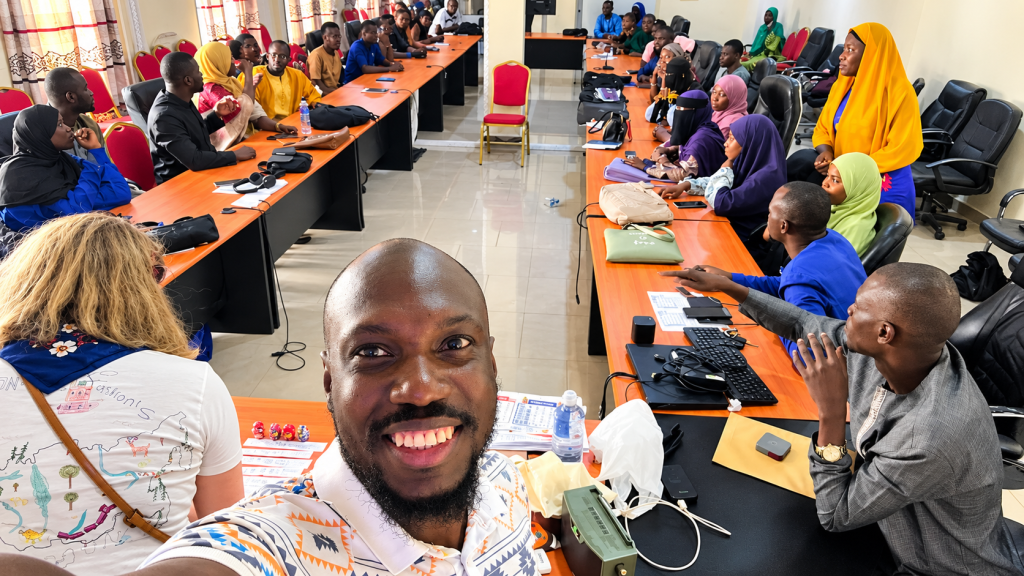
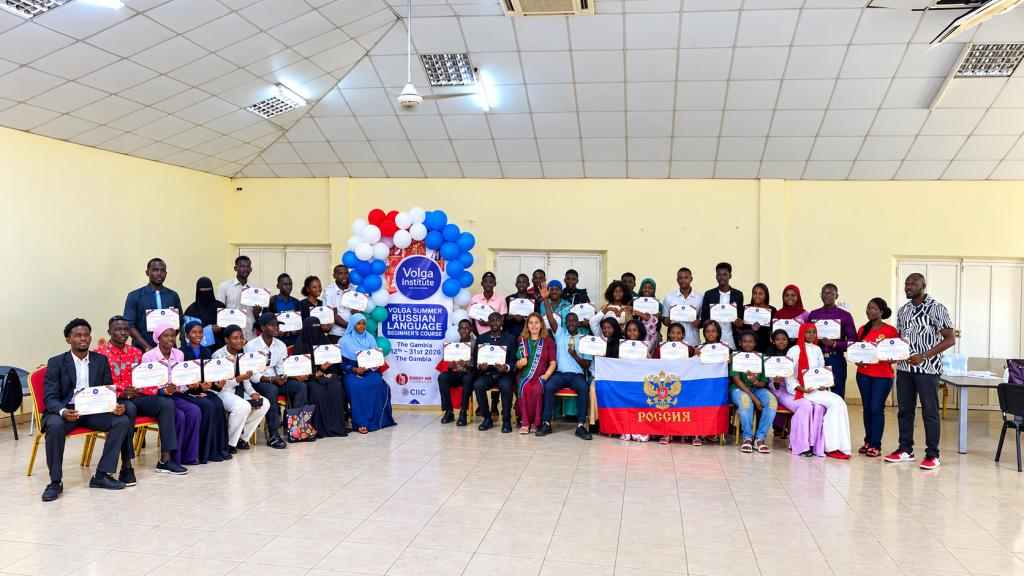
A graduate of Tver State University, Jibril Faal from Gambia has founded his own organisation – the SmileNation Foundation – which helps young people from Gambia take part in various events in Russia. Once he himself arrived in Russia without knowing a single word of Russian and went through everything a person feels when finding themselves in a foreign language environment. Now he is trying to help those who are interested in obtaining a Russian education or establishing professional contacts with our country. Through Jibril’s efforts, and with the support of the Russkiy Mir Foundation, the first Russian language courses “Volga” were recently opened in Gambia.
– How did the idea of the “Volga” summer courses come about, and why did you feel that there was a real need for them in Gambia?
– The idea of the “Volga” summer courses grew directly out of my own experience as a student in Russia. When I first arrived, I did not speak Russian and had to complete a preparatory course before I could begin my studies at Tver State University. That experience made me realise how much time and effort could be saved if students and specialists had the opportunity to learn Russian before they set foot on Russian soil. I wanted to create a bridge – a way for Gambians to enter Russia not as strangers, but as prepared and confident people. That is how the idea of the “Volga” summer courses for beginners in Russian was born. Thanks to the generous support and a grant from the Russkiy Mir Foundation, I was able to turn this dream into reality in Gambia, and the response was overwhelmingly positive, leaving a deep impression on everyone who took part.
– How competitive was the selection for the courses? What criteria were used to choose the participants, and who showed the greatest interest?
– The selection process was highly competitive: we received more than 94 applications for a limited number of places. To choose the most suitable candidates, we looked for people who demonstrated not only a strong interest in the language, but also a clear intention to use Russian in their future academic or professional activities. The largest group of applicants were university students, but we were also pleased to see considerable interest from the private sector and from several government ministries. In the end, we selected a diverse group representing different ages, social backgrounds, and professions. What united them all was a shared desire to learn Russian and, perhaps even more importantly, a deep interest in Russian culture and way of life.
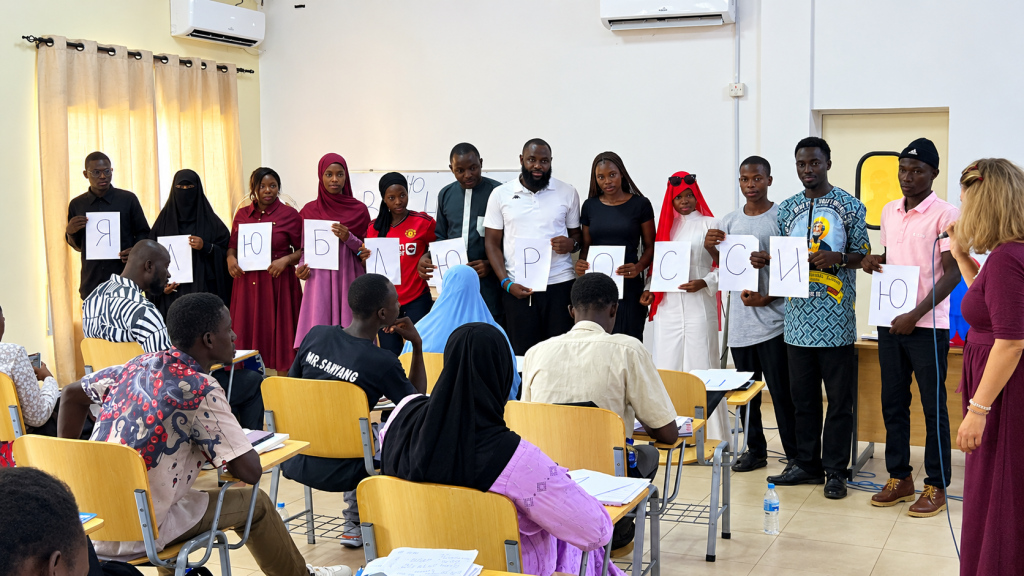
– How would you assess the results of the two-week programme? Were you able to achieve the goals you had set – to help participants acquire basic Russian language skills?
– I can confidently say that we exceeded our own expectations. The level of enthusiasm and commitment was outstanding, and by the end of the two weeks, the students had made significant progress. They were able to construct simple sentences, confidently introduce themselves, identify Russian grammatical cases and nouns, and count from 1 to 100. But even more importantly, their desire to continue learning was so strong that it became clear that the programme had sown the seeds for long-term engagement. The results strengthened our belief that there is genuine demand for learning Russian in The Gambia, and we are now exploring opportunities to offer more advanced levels in the future.
– I can confidently say that we exceeded our own expectations. The level of enthusiasm and commitment was outstanding, and by the end of the two weeks, the students had made significant progress. They were able to construct simple sentences, confidently introduce themselves, identify Russian grammatical cases and nouns, and count from 1 to 100. But even more importantly, their desire to continue learning was so strong that it became clear that the programme had sown the seeds for long-term engagement. The results strengthened our belief that there is genuine demand for learning Russian in The Gambia, and we are now exploring opportunities to offer more advanced levels in the future.
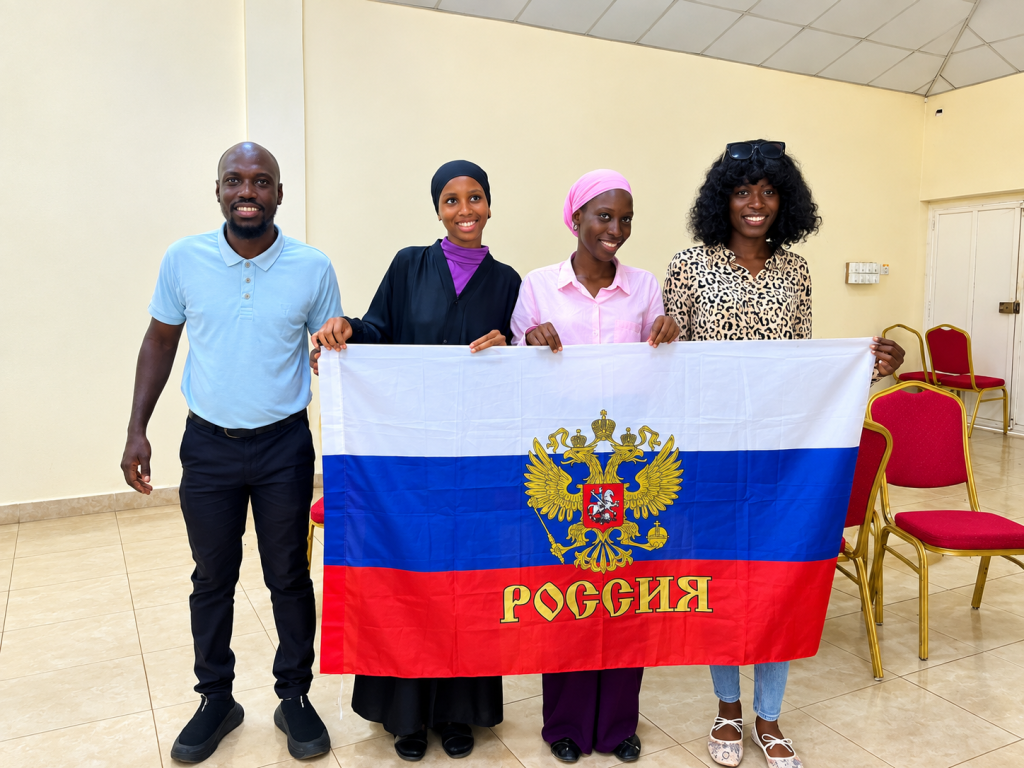
– What did the students find most difficult, and what evoked an emotional response from your students during the lessons?
– The greatest challenge for most of the students was pronunciation: certain Russian sounds have no direct equivalents in the local languages. However, thanks to constant practice, they made noticeable progress over the two weeks. One of the most enjoyable and easy-going moments came during an exercise in which the students were asked to introduce themselves using random words such as “love”, “rap”, or “girl”. Watching them creatively weave these words into their introductions was very amusing and helped to break the ice. Another memorable moment was discovering the matryoshka doll: the very idea that one doll could contain so many smaller versions of itself inside was a revelation to them – a pleasant cultural shock that turned into genuine admiration for Russian craftsmanship and design.
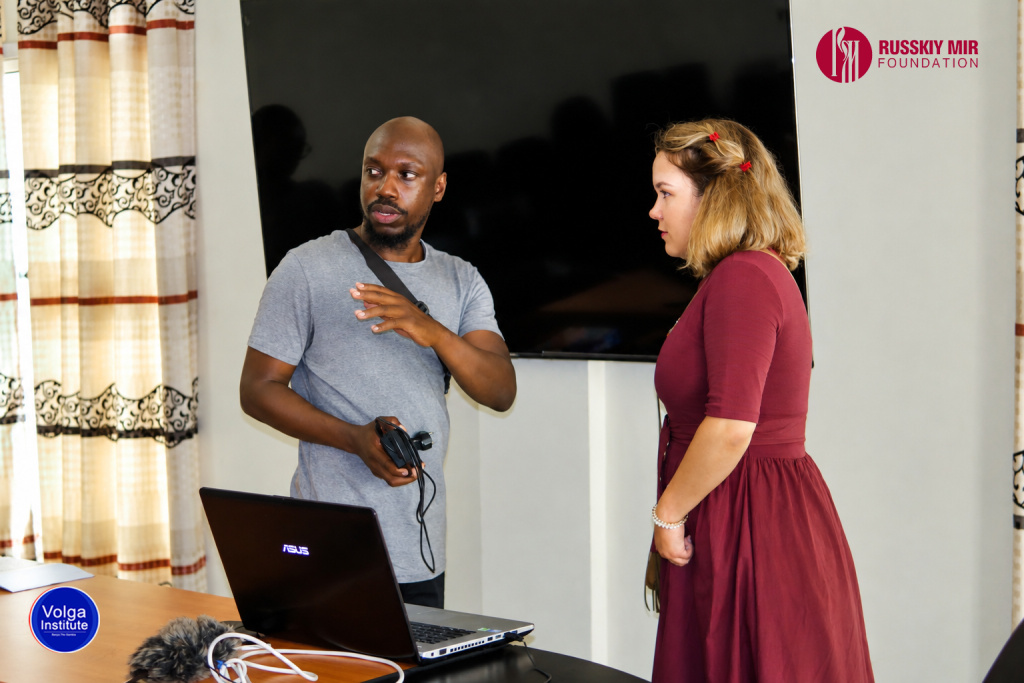
The most touching moment of the course, however, was when the students presented gifts to our teacher, Ms Margarita Kartsova. It was a heartfelt gesture of gratitude for her dedication, patience, and skill, with which she made the Russian language so accessible and engaging. In return, she received small souvenirs from The Gambia, symbolising the cultural exchange that had taken place. The warmth in that room was palpable – this was more than a language lesson; it was a genuine meeting of hearts and minds. For me, that moment embodied the true spirit of the programme.
– During the course, you listened to Russian music, and the students watched videos about life in Russia. Which aspect of Russian culture or which fact surprised or particularly interested them? Did these two weeks help dispel any stereotypes?
– The strongest reaction came from discovering that Yuri Gagarin was the first human in space. For many students, this contradicted the dominant narratives they had encountered in the Gambian media and sparked deep admiration for Russia’s scientific achievements. Their respect for Russian researchers and innovators noticeably grew over the course of the programme. The students were also astonished to learn that Russia spans 11 time zones – a fact that left many of them in awe of the sheer size of the country. Images of modern Moscow, with its clean streets and impressive skyscrapers, further undermined the preconceived notion that Russia is an outdated or unwelcoming country.
One of the participants, who had previously visited Russia to attend the KARDО award ceremony in Stavropol, shared his impressions of the country’s warmth and hospitality, which deeply resonated with the group. By the end of the two weeks, many stereotypes had been dispelled, and the students expressed a genuine desire to visit Russia themselves. To support this interest, I shared information about scholarship opportunities available through the “Education in Russia” platform, hoping to turn their curiosity into reality.
– Do you have plans to develop this initiative in the future?
– Although the two-week intensive course has come to an end, demand continues to grow – we are still receiving requests to extend the course. In response, we have already launched weekly online classes via Zoom to maintain the momentum. We have also created a community of more than 100 motivated learners who are eager to continue their journey with the Russian language. My long-term goal is to integrate Russian into The Gambia’s education system, starting at university level, where it could be offered as an elective alongside other foreign languages. I have already met with His Excellency Ambassador Korneev, the Ambassador Extraordinary and Plenipotentiary of Russia to The Gambia, who highly praised the project and expressed his strong support for its continuation. My commitment is to continue offering these courses to the people of The Gambia, not only teaching the language but also strengthening the educational, cultural, and interpersonal ties that will benefit people of all ages across the country. This is only the beginning of a much broader mission.
– Although the two-week intensive course has come to an end, demand continues to grow – we are still receiving requests to extend the course. In response, we have already launched weekly online classes via Zoom to maintain the momentum. We have also created a community of more than 100 motivated learners who are eager to continue their journey with the Russian language. My long-term goal is to integrate Russian into The Gambia’s education system, starting at university level, where it could be offered as an elective alongside other foreign languages. I have already met with His Excellency Ambassador Korneev, the Ambassador Extraordinary and Plenipotentiary of Russia to The Gambia, who highly praised the project and expressed his strong support for its continuation. My commitment is to continue offering these courses to the people of The Gambia, not only teaching the language but also strengthening the educational, cultural, and interpersonal ties that will benefit people of all ages across the country. This is only the beginning of a much broader mission.