The premiere of the play “Tonya”, about the women of Moscow during the Great Patriotic War, has taken place in Lima, the capital of Peru. The author of the storyline and the text, as well as the performer of the leading role, was the young actress Olga Guerrero-Kozitskaya, who comes from a Russian-Peruvian family. The Spanish-language production was based by the young woman on the accounts of her great-grandmother, whilst a trip Olga made to Moscow and her visits to museums of the Great Patriotic War helped her to recreate the period.
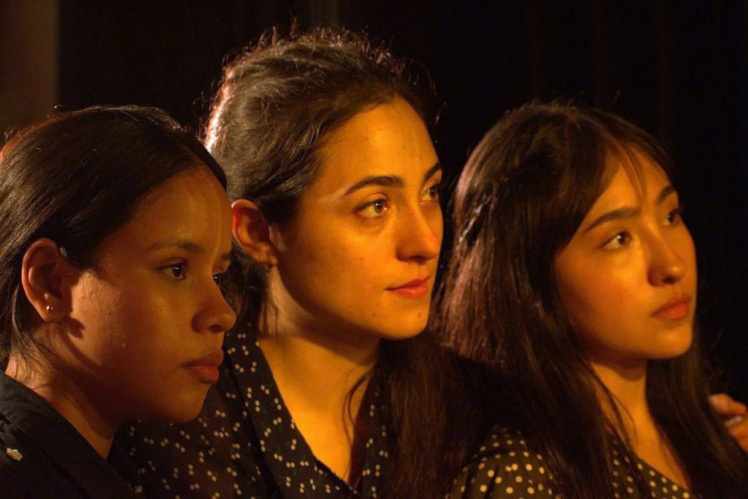
The premiere of the play, which took place at the Lima Theatre Club (Club de teatro de Lima), was timed to coincide with the anniversary of victory in the Great Patriotic War and became a cultural event in Peru. The auditorium was filled with Russian compatriots, descendants of Russian émigrés, and Peruvians.
According to the authors of the production, local spectators confessed that, in school, they had studied a different history of the Second World War and had not known of the sacrifices the Soviet Union had made in the struggle against Nazism. “Russkiy Mir” asked Olga and those who assisted her about how the play was created and how it is being received by audiences.
According to the authors of the production, local spectators confessed that, in school, they had studied a different history of the Second World War and had not known of the sacrifices the Soviet Union had made in the struggle against Nazism. “Russkiy Mir” asked Olga and those who assisted her about how the play was created and how it is being received by audiences.
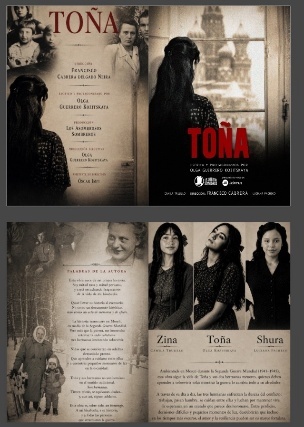
From the family, from the heart, from talent
Four performances of the play “Tonya” had been scheduled at the theatre in Lima, running until the end of May. Ahead of the fourth and final showing (the production is set to return to the stage in the future), “Russkiy Mir” organised an online interview with Peru. Gathered on the other side of the screen were the author of the production and performer of the leading role, Olga Guerrero-Kozitskaya, along with her mother, Svetlana Kozitskaya, Deputy Chairwoman of the Coordinating Council of Organisations of Russian Compatriots in Peru, and Evgenia Smirnova, Director of the Russian House in Peru.
- The creation of this play has become a significant event not only for the Russian House, but for the entire Russian-speaking community in Peru and for everyone who cares about our history and culture,” - noted Yevgenia Smirnova. - I would even say that on the scale of Latin America, this initiative is absolutely unique. It comes from the family, from the heart, and from the talent of one particular person – our dear compatriot Olya. Her work was born and nurtured within the family, thanks to the wonderful traditions that exist there.
The May performances attracted both Russian compatriots and local Peruvians. Because the play is performed in Spanish, the local audience was able to immerse themselves fully in the life of Moscow during the Great Patriotic War without being distracted by translation. Songs from the war years in Russian and announcements by Yuri Levitan added authenticity and atmosphere to the story.
Four performances of the play “Tonya” had been scheduled at the theatre in Lima, running until the end of May. Ahead of the fourth and final showing (the production is set to return to the stage in the future), “Russkiy Mir” organised an online interview with Peru. Gathered on the other side of the screen were the author of the production and performer of the leading role, Olga Guerrero-Kozitskaya, along with her mother, Svetlana Kozitskaya, Deputy Chairwoman of the Coordinating Council of Organisations of Russian Compatriots in Peru, and Evgenia Smirnova, Director of the Russian House in Peru.
- The creation of this play has become a significant event not only for the Russian House, but for the entire Russian-speaking community in Peru and for everyone who cares about our history and culture,” - noted Yevgenia Smirnova. - I would even say that on the scale of Latin America, this initiative is absolutely unique. It comes from the family, from the heart, and from the talent of one particular person – our dear compatriot Olya. Her work was born and nurtured within the family, thanks to the wonderful traditions that exist there.
The May performances attracted both Russian compatriots and local Peruvians. Because the play is performed in Spanish, the local audience was able to immerse themselves fully in the life of Moscow during the Great Patriotic War without being distracted by translation. Songs from the war years in Russian and announcements by Yuri Levitan added authenticity and atmosphere to the story.
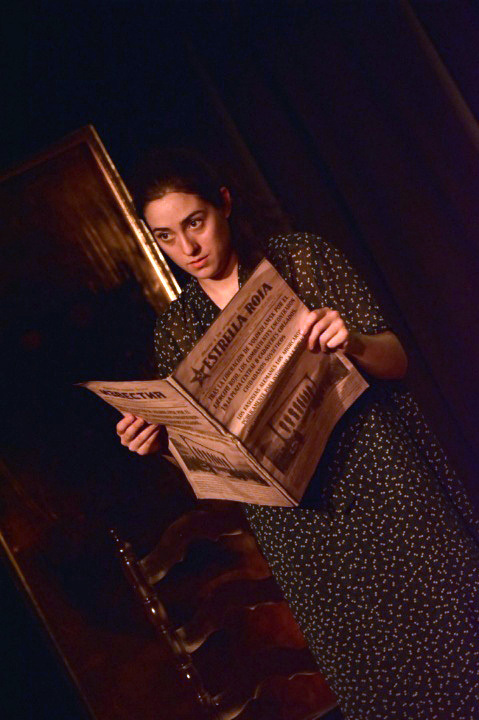
- The production is aimed primarily at a Peruvian audience, - noted Svetlana Kozitskaya. - Peru and Latin America have always been far removed from the events of the Great Patriotic War, and local people do not possess a full picture of it. Many Peruvians came up to us after the performance and said that they had not known this part of history. You see, in the schools here, they teach that it was the Americans who won the Second World War. That is sad, of course. The audience thanked the creators of the play for this new knowledge and said they would like to read and learn more about it.
The actress’s mother recounted that she had come to Peru with her husband. A native of Moscow, she met her Peruvian husband while he was studying at the Gubkin Russian State University of Oil and Gas. Their elder daughter was born in Moscow, while the younger one, Olga, was born in Peru. The family regularly visits Russia, and the girls managed to meet their great-grandmother and hear her stories about the Great Patriotic War.
- We brought our children up with a love for Russia – it has always been that way,” said Svetlana Kozitskaya. “We always support our country and live with the Russian spirit. In addition, as part of my work with the Coordination Council of Russian Compatriots, we organise numerous events dedicated to preserving historical memory and promoting the Russian language in Peru. My daughters grew up in this environment and absorbed it all. They not only love Russia, but they also know what is happening in the country and what it lives by.
The actress’s mother recounted that she had come to Peru with her husband. A native of Moscow, she met her Peruvian husband while he was studying at the Gubkin Russian State University of Oil and Gas. Their elder daughter was born in Moscow, while the younger one, Olga, was born in Peru. The family regularly visits Russia, and the girls managed to meet their great-grandmother and hear her stories about the Great Patriotic War.
- We brought our children up with a love for Russia – it has always been that way,” said Svetlana Kozitskaya. “We always support our country and live with the Russian spirit. In addition, as part of my work with the Coordination Council of Russian Compatriots, we organise numerous events dedicated to preserving historical memory and promoting the Russian language in Peru. My daughters grew up in this environment and absorbed it all. They not only love Russia, but they also know what is happening in the country and what it lives by.
In memory and love
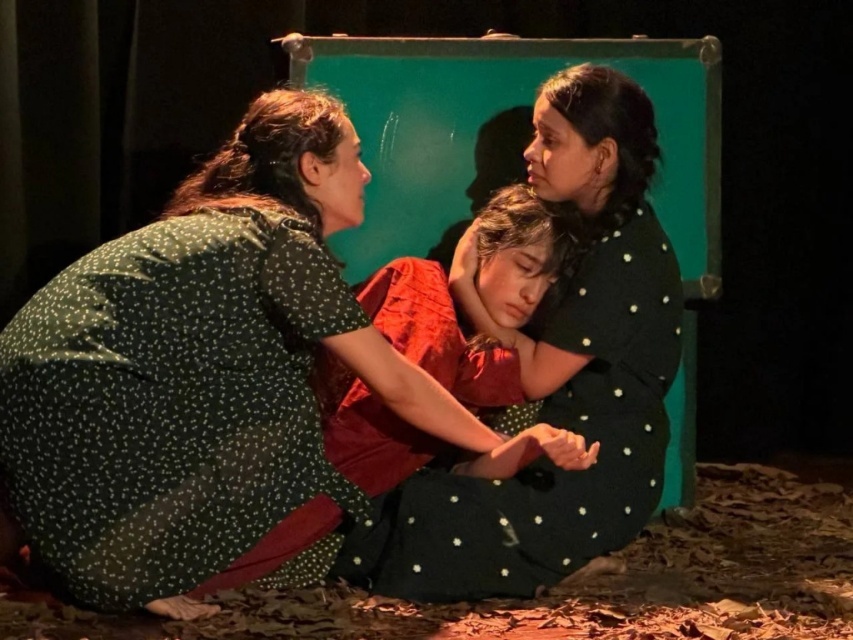
“This work was born from my own story,” - Olga Guerrero-Kozitskaya wrote in the programme notes for the play “Tonya”. - “My mother is Russian and my father is Peruvian. I grew up listening to my grandmother’s stories. I wanted to bring this story to the stage – not as a historical document, but as an act of memory and love. More than the war itself, I wanted to show the everyday life of three sisters trying to survive. Girls who were forced to grow up too early. This work is my modest tribute to my grandmother and to all those who lived through that era.”
Olga told “Russkiy Mir” that she was prompted to write the play by the fact that people in Peru know very little about the Great Patriotic War.
- It seemed to me that the life of three girls during the war would be interesting both to Peruvians and Russians alike,” - she says. - “And I was right. When we performed the play, I was deeply moved by how strongly people responded to the story. Both Russians and Peruvians cried and empathised. Before writing the text, I carried out extensive research. In January I went to Moscow, spoke with my grandmother and aunt, and gathered the memories of my great-grandmother, who told many stories about her life and the lives of her sisters during the Great Patriotic War. Their mother had died, and their father had gone to the front as a militiaman and was killed. The sisters were left with their stepmother, who treated them badly.
“This work was born from my own story,” - Olga Guerrero-Kozitskaya wrote in the programme notes for the play “Tonya”. - “My mother is Russian and my father is Peruvian. I grew up listening to my grandmother’s stories. I wanted to bring this story to the stage – not as a historical document, but as an act of memory and love. More than the war itself, I wanted to show the everyday life of three sisters trying to survive. Girls who were forced to grow up too early. This work is my modest tribute to my grandmother and to all those who lived through that era.”
Olga told “Russkiy Mir” that she was prompted to write the play by the fact that people in Peru know very little about the Great Patriotic War.
- It seemed to me that the life of three girls during the war would be interesting both to Peruvians and Russians alike,” - she says. - “And I was right. When we performed the play, I was deeply moved by how strongly people responded to the story. Both Russians and Peruvians cried and empathised. Before writing the text, I carried out extensive research. In January I went to Moscow, spoke with my grandmother and aunt, and gathered the memories of my great-grandmother, who told many stories about her life and the lives of her sisters during the Great Patriotic War. Their mother had died, and their father had gone to the front as a militiaman and was killed. The sisters were left with their stepmother, who treated them badly.
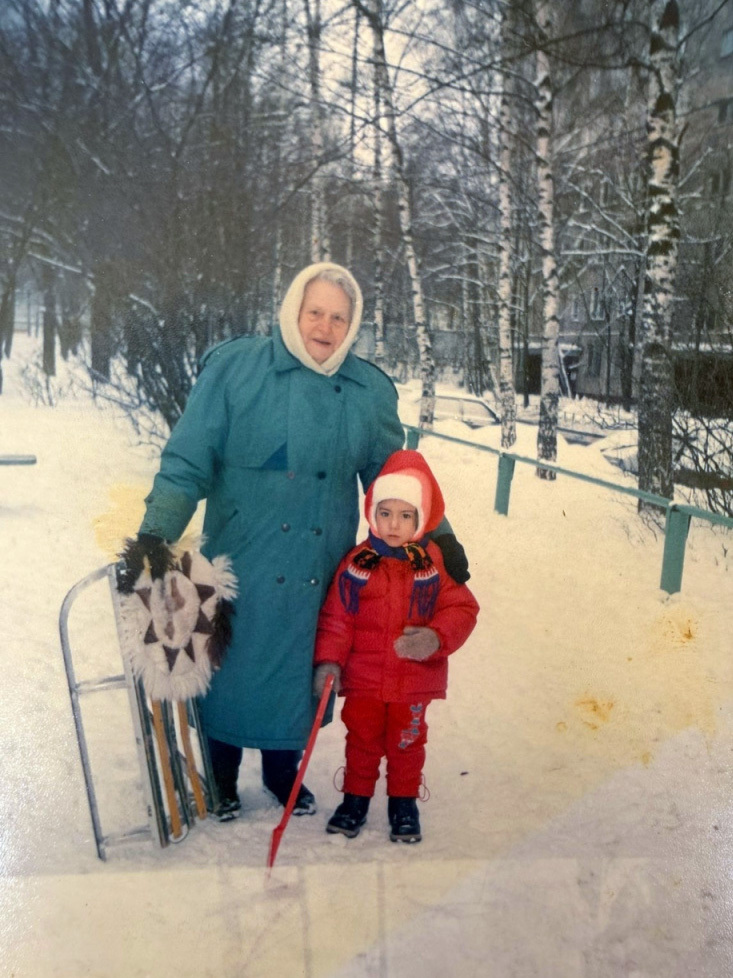
While preparing the production, Olga visited several museums dedicated to the history of the Great Patriotic War. She travelled to places in Moscow and the Moscow region where battles had taken place and immersed herself in Russian and Soviet films about the war.
Upon returning to Peru, she set about writing the script. The well-known Peruvian director Francisco Cabrera Delgado Neyra read Olga’s draft and took on the production with great enthusiasm. The text was reworked during rehearsals, tested on stage. “Everything that is said in the play is true,” - Olga says.
Rehearsals began, and Peruvian actresses Camila Trujillo and Luciana Pacheco were invited to play the roles of the protagonist’s sisters. Olga prepared a selection of films for them and spoke to them at length so that the girls could fully absorb the theme and the historical context.
From Moscow, Olga brought back not only facts and emotions that formed the basis of the script, but also props: clothes and shoes reminiscent of those worn during the Great Patriotic War. These items were collected piece by piece. It was fortunate that she had taken them in reserve, for in some of the costumes the actresses were unable to move freely on stage.
Upon returning to Peru, she set about writing the script. The well-known Peruvian director Francisco Cabrera Delgado Neyra read Olga’s draft and took on the production with great enthusiasm. The text was reworked during rehearsals, tested on stage. “Everything that is said in the play is true,” - Olga says.
Rehearsals began, and Peruvian actresses Camila Trujillo and Luciana Pacheco were invited to play the roles of the protagonist’s sisters. Olga prepared a selection of films for them and spoke to them at length so that the girls could fully absorb the theme and the historical context.
From Moscow, Olga brought back not only facts and emotions that formed the basis of the script, but also props: clothes and shoes reminiscent of those worn during the Great Patriotic War. These items were collected piece by piece. It was fortunate that she had taken them in reserve, for in some of the costumes the actresses were unable to move freely on stage.
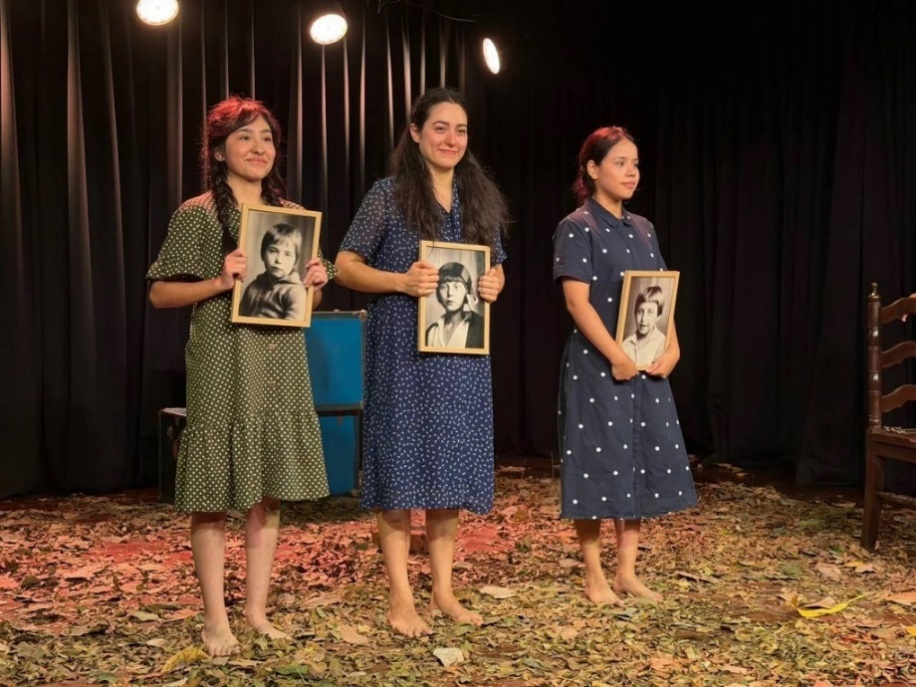
- What struck me most about this story? I wrote a monologue that still makes me cry when I read it, - the young actress shared. Its theme is habit – the kind of habit that remains alive even in the midst of war. People were perishing, terrible events were unfolding, yet those who were alive grew accustomed to it all: they worked, they loved, they lived, remaining human beings, women and men. Yet at the same time, they experienced a sense of guilt. We strove to convey all the many-sidedness of human feeling during those hard years. There is a deeply moving scene at the end, when the sisters, realising that they have no one left to wait for from the war, nevertheless put on their shoes and set off to meet the victorious soldiers.
What’s next? The performances of Tonya are planned to continue, possibly not only in Lima. Olga Guerrero-Kozitskaya, who has graduated from a Peruvian university with a degree in acting, intends to qualify as a director and to continue working with historical subjects. She is already in talks about a production devoted to the history of Orthodoxy in Peru. But the theme of the Great Patriotic War will most certainly appear on the local stage more than once again.
What’s next? The performances of Tonya are planned to continue, possibly not only in Lima. Olga Guerrero-Kozitskaya, who has graduated from a Peruvian university with a degree in acting, intends to qualify as a director and to continue working with historical subjects. She is already in talks about a production devoted to the history of Orthodoxy in Peru. But the theme of the Great Patriotic War will most certainly appear on the local stage more than once again.