One hundred and fifty years ago, Nikolay Burdenko was born – a brilliant surgeon, the creator of one of the world's leading schools of neurosurgery, a reformer of Soviet healthcare, and the founder of the Academy of Medical Sciences of the USSR. He was forged into a consummate professional by four wars, during which he served as a military surgeon, saving soldiers whose wounds were often considered beyond hope. Today, his name is associated not only with the N. N. Burdenko Main Military Clinical Hospital in Moscow, but also by the very methods of surgery that new generations of surgeons study.
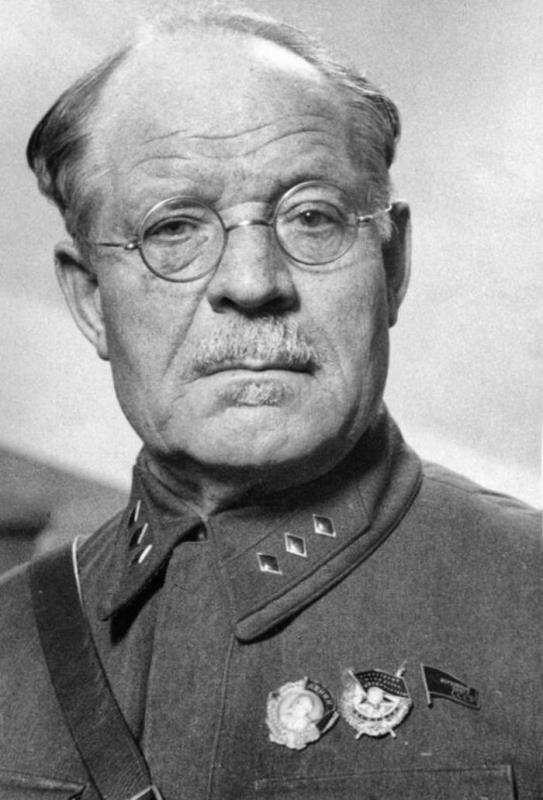
He chose to heal bodies, not souls
Nikolay Burdenko was born on 22 May (3 June, New Style) 1876 in the village of Kamenka. His father, a former serf who worked as a clerk for a minor landowner, dreamt of giving his son the best possible education – not a secular one, however, but a spiritual one, deeming this path to be the most successful of careers.
At first, the boy seemed determined to fulfil his father's hopes. At the age of five, he attempted to enrol himself in the local village school. Initially, the teacher turned the boy away, but later capitulated under his insistence and permitted him to attend lessons. After school, Nikolay became a student first of a theological college, and thereafter of the theological seminary in Penza. His achievements as a seminarian were so outstanding that he was granted a letter of recommendation to the St Petersburg Theological Academy, where he passed the entrance examinations with distinction. It would have seemed that a spiritual career lay before him, but no. The gifted young man abruptly changed the direction of his life: now he was drawn to heal not the souls of men, but their strictly mortal bodies. His father regarded this decision as a profound betrayal: in his wrath, he sent him a letter containing a few postage stamps and a postscript: “This is for you to write a letter when you're starving to death.” He never did forgive his son, and did not wish to see him to the end of his days.
Survival rates of the wounded increased dramatically
To train as a doctor, Nikolay Burdenko had to travel to the distant city of Tomsk. According to the laws of Tsarist Russia, seminarians were not allowed to study at secular universities in the capital. The medical faculty had just opened at Tomsk University, where he quickly proved himself to be a highly capable student. By his third year, Nikolay had already become an assistant to the prosector. He spent a great deal of time in the university’s anatomical theatre and willingly helped weaker students.
In those years, Russia was being inexorably drawn into the whirlwind of revolutionary activity. Student strikes and protests were sweeping the country. Nikolay Burdenko took part in them as well, and as a result, the promising student was expelled for revolutionary activities. After an unsuccessful attempt to be reinstated, Burdenko transferred to Yuryev University (formerly Dorpat, now the University of Tartu in Estonia). However, he did not change his views: after participating in yet another student gathering, he was expelled once again.
While the university could bar him from studying, it could not bar him from medicine. The unfinished doctor Burdenko set off for the Kherson Governorate, where a typhus epidemic was raging, and later spent almost a year working in a colony for children with tuberculosis. This would become his modus vivendi – always finding himself at the epicentre of pain and suffering, where his help was vitally needed.
The professorial staff of Yuryev University helped the gifted student Burdenko to be reinstated. He worked as an assistant to the assistant surgeon in the university’s surgical clinic. It was there that he first became acquainted with the works of the outstanding Russian surgeon and founder of military field surgery, Nikolay Ivanovich Pirogov, which made a profound impression upon him.
In 1904, the Russo-Japanese War broke out, and the young doctor Burdenko volunteered for the front. He joined a mobile sanitary detachment, where he served simultaneously as a medical orderly (carrying wounded soldiers from the battlefield), a paramedic (providing first aid) and a surgeon (performing minor operations). The appalling state of medical care at the front made a devastating impression on Burdenko and determined the course of his entire future life as a surgeon: to ensure that wounded soldiers received help as quickly and effectively as possible.
After the war ended, he passed his final examinations brilliantly and received his medical degree with distinction. A mere two years later, he defended his dissertation and was awarded the title of Doctor of Medicine. This was followed by a year-long internship in clinics in Germany and Switzerland, where he studied the anatomy of the brain. Upon his return, he joined the surgical clinic at Yuryev University, where he was appointed Extraordinary Professor in the Department of Surgery.
Nikolay Burdenko was born on 22 May (3 June, New Style) 1876 in the village of Kamenka. His father, a former serf who worked as a clerk for a minor landowner, dreamt of giving his son the best possible education – not a secular one, however, but a spiritual one, deeming this path to be the most successful of careers.
At first, the boy seemed determined to fulfil his father's hopes. At the age of five, he attempted to enrol himself in the local village school. Initially, the teacher turned the boy away, but later capitulated under his insistence and permitted him to attend lessons. After school, Nikolay became a student first of a theological college, and thereafter of the theological seminary in Penza. His achievements as a seminarian were so outstanding that he was granted a letter of recommendation to the St Petersburg Theological Academy, where he passed the entrance examinations with distinction. It would have seemed that a spiritual career lay before him, but no. The gifted young man abruptly changed the direction of his life: now he was drawn to heal not the souls of men, but their strictly mortal bodies. His father regarded this decision as a profound betrayal: in his wrath, he sent him a letter containing a few postage stamps and a postscript: “This is for you to write a letter when you're starving to death.” He never did forgive his son, and did not wish to see him to the end of his days.
Survival rates of the wounded increased dramatically
To train as a doctor, Nikolay Burdenko had to travel to the distant city of Tomsk. According to the laws of Tsarist Russia, seminarians were not allowed to study at secular universities in the capital. The medical faculty had just opened at Tomsk University, where he quickly proved himself to be a highly capable student. By his third year, Nikolay had already become an assistant to the prosector. He spent a great deal of time in the university’s anatomical theatre and willingly helped weaker students.
In those years, Russia was being inexorably drawn into the whirlwind of revolutionary activity. Student strikes and protests were sweeping the country. Nikolay Burdenko took part in them as well, and as a result, the promising student was expelled for revolutionary activities. After an unsuccessful attempt to be reinstated, Burdenko transferred to Yuryev University (formerly Dorpat, now the University of Tartu in Estonia). However, he did not change his views: after participating in yet another student gathering, he was expelled once again.
While the university could bar him from studying, it could not bar him from medicine. The unfinished doctor Burdenko set off for the Kherson Governorate, where a typhus epidemic was raging, and later spent almost a year working in a colony for children with tuberculosis. This would become his modus vivendi – always finding himself at the epicentre of pain and suffering, where his help was vitally needed.
The professorial staff of Yuryev University helped the gifted student Burdenko to be reinstated. He worked as an assistant to the assistant surgeon in the university’s surgical clinic. It was there that he first became acquainted with the works of the outstanding Russian surgeon and founder of military field surgery, Nikolay Ivanovich Pirogov, which made a profound impression upon him.
In 1904, the Russo-Japanese War broke out, and the young doctor Burdenko volunteered for the front. He joined a mobile sanitary detachment, where he served simultaneously as a medical orderly (carrying wounded soldiers from the battlefield), a paramedic (providing first aid) and a surgeon (performing minor operations). The appalling state of medical care at the front made a devastating impression on Burdenko and determined the course of his entire future life as a surgeon: to ensure that wounded soldiers received help as quickly and effectively as possible.
After the war ended, he passed his final examinations brilliantly and received his medical degree with distinction. A mere two years later, he defended his dissertation and was awarded the title of Doctor of Medicine. This was followed by a year-long internship in clinics in Germany and Switzerland, where he studied the anatomy of the brain. Upon his return, he joined the surgical clinic at Yuryev University, where he was appointed Extraordinary Professor in the Department of Surgery.
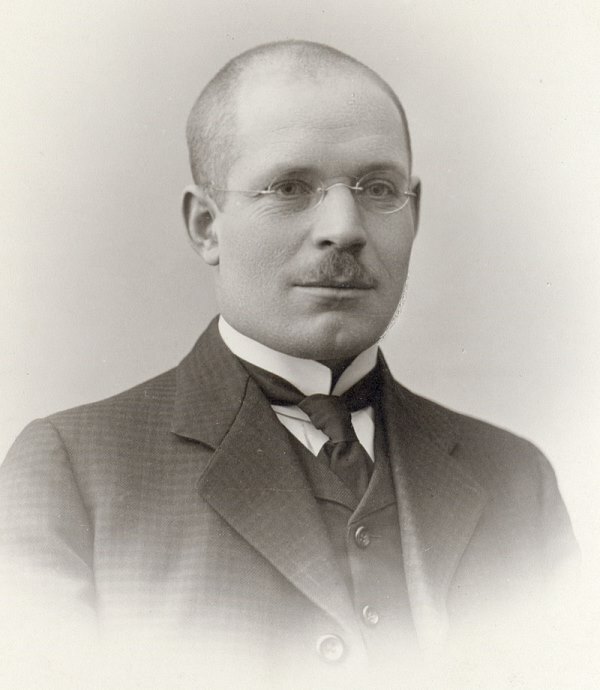
In August 1914, Burdenko once again left his well-ordered life and volunteered for the front – the First World War had begun. By now he was no longer a medical orderly or paramedic, but a well-known surgeon. As part of the active army, he took part in the offensive in East Prussia and the Warsaw-Ivangorod Operation. Thanks to his efforts, more than 25,000 wounded soldiers were successfully evacuated from the battlefield. He often provided emergency surgical care directly at field dressing stations, frequently under enemy fire. Most importantly, Surgeon Burdenko managed to dramatically increase the survival rate of the wounded – an achievement that even became a subject of discussion among the military command.
How did he achieve this? Nikolay Burdenko drew many important conclusions from his experience in the previous war. In particular, he introduced the sorting of wounded soldiers – separating those who could withstand long transportation to a hospital from those who needed immediate help. Abdominal wounds caused a great many deaths. Under Burdenko’s leadership, special departments were organised in field hospitals for operations on wounds to the abdomen, the lungs, and the head. He also created specialised teams of doctors to combat traumatic shock – that gravest of complications after wounding, which led to death. In addition, he worked on organising sanitary and anti-epidemic services, chemical protection, and even the prevention of venereal diseases. After suffering a concussion in the summer of 1917, Nikolay Burdenko returned to Yuryev University.
The USSR as a global centre of neurosurgery
The Revolution of 1917 found Nikolay Burdenko in Yuryev, a city that soon came under German occupation. The German military authorities offered Professor Burdenko the opportunity to head a university department, but he declined. In June 1918, together with other professors and the equipment of the Yuryev clinic, he found himself in Voronezh.
Many years later, he explained the reasoning behind his decision: “I faced a dilemma: either remain in the old world, where everything was familiar and known, or set out for a country where everything was unfamiliar, unknown, and new, where a powerful call was being raised in the name of a different future, the very antithesis of the past... Without hesitation, I left them and returned home, to a people who dared greatly and transformed their aspirations into forms the world had never seen before.”
Having scarcely arrived in Voronezh, Burdenko immediately devoted himself to organising military hospitals for the Red Army. He established specialised courses in military field surgery for medical students and practising physicians at Voronezh University, founded a nursing school where he personally taught. In 1920, on his initiative, the N. I. Pirogov Medical Society was established in Voronezh, with Burdenko serving as its chairman. Today, Voronezh State Medical University also bears the name of the eminent surgeon Nikolay Burdenko.
How did he achieve this? Nikolay Burdenko drew many important conclusions from his experience in the previous war. In particular, he introduced the sorting of wounded soldiers – separating those who could withstand long transportation to a hospital from those who needed immediate help. Abdominal wounds caused a great many deaths. Under Burdenko’s leadership, special departments were organised in field hospitals for operations on wounds to the abdomen, the lungs, and the head. He also created specialised teams of doctors to combat traumatic shock – that gravest of complications after wounding, which led to death. In addition, he worked on organising sanitary and anti-epidemic services, chemical protection, and even the prevention of venereal diseases. After suffering a concussion in the summer of 1917, Nikolay Burdenko returned to Yuryev University.
The USSR as a global centre of neurosurgery
The Revolution of 1917 found Nikolay Burdenko in Yuryev, a city that soon came under German occupation. The German military authorities offered Professor Burdenko the opportunity to head a university department, but he declined. In June 1918, together with other professors and the equipment of the Yuryev clinic, he found himself in Voronezh.
Many years later, he explained the reasoning behind his decision: “I faced a dilemma: either remain in the old world, where everything was familiar and known, or set out for a country where everything was unfamiliar, unknown, and new, where a powerful call was being raised in the name of a different future, the very antithesis of the past... Without hesitation, I left them and returned home, to a people who dared greatly and transformed their aspirations into forms the world had never seen before.”
Having scarcely arrived in Voronezh, Burdenko immediately devoted himself to organising military hospitals for the Red Army. He established specialised courses in military field surgery for medical students and practising physicians at Voronezh University, founded a nursing school where he personally taught. In 1920, on his initiative, the N. I. Pirogov Medical Society was established in Voronezh, with Burdenko serving as its chairman. Today, Voronezh State Medical University also bears the name of the eminent surgeon Nikolay Burdenko.
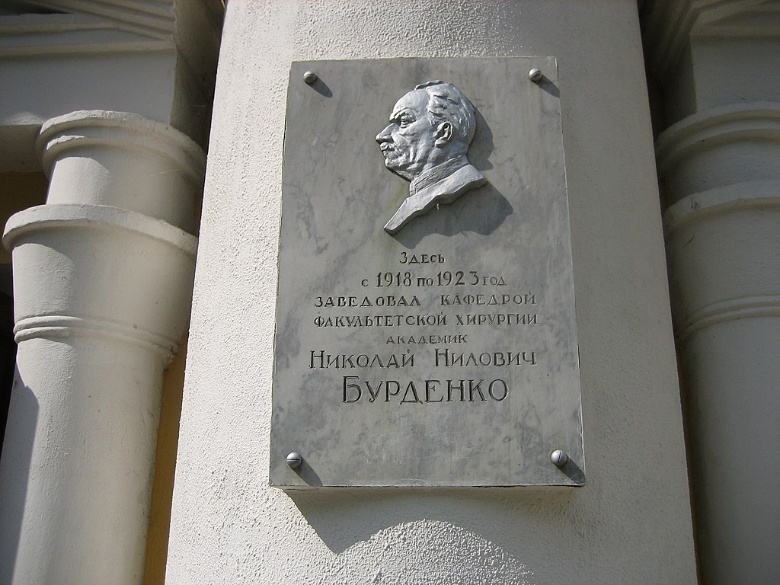
In 1923, having moved to Moscow, Burdenko established a neurosurgical department within the clinic of Moscow State University. In 1930, this department became part of the First Moscow Medical Institute. By that time, Moscow would become one of the world's leading centres of neurosurgery.
Burdenko became the first surgeon in the country to perform operations on the brain, drawing upon his extensive experience in military field surgery. At the time, such procedures were still exceedingly rare worldwide, and many surgeons were reluctant to undertake them. Yet under Burdenko's scalpel, patients once considered beyond hope began to recover, and individuals who had lost their sight due to brain tumours regained their vision. In effect, he created the field of brain tumour surgery in the Soviet Union almost from scratch. Doctors from Germany, France, and America travelled to attend the Soviet surgeon's masterclasses, and foreign patients begged him to take them on for surgery.
“It is worth living only when one works”
At the same time, his students and assistants remembered him as a man who was far from easy in his dealings, a man of stern and exacting character, extraordinarily demanding of both himself and those around him. He insisted that theatre nurses should understand, without a word being spoken, precisely which instrument the surgeon required at a given moment and should place it instantly into his outstretched hand. The slightest mistake or lack of concentration could provoke his displeasure. He was equally intolerant of untidiness, whether in a surgeon's appearance or in the sight of a stained hospital sheet. According to those who worked alongside him, Burdenko demanded complete dedication to the medical duty. It is therefore unsurprising that only a few days before his death he wrote in his diary: “It is worth living only when one works; if one does not work, then it is not worth living.” This uncompromising statement captures the essence of Burdenko's character.
Burdenko became the first surgeon in the country to perform operations on the brain, drawing upon his extensive experience in military field surgery. At the time, such procedures were still exceedingly rare worldwide, and many surgeons were reluctant to undertake them. Yet under Burdenko's scalpel, patients once considered beyond hope began to recover, and individuals who had lost their sight due to brain tumours regained their vision. In effect, he created the field of brain tumour surgery in the Soviet Union almost from scratch. Doctors from Germany, France, and America travelled to attend the Soviet surgeon's masterclasses, and foreign patients begged him to take them on for surgery.
“It is worth living only when one works”
At the same time, his students and assistants remembered him as a man who was far from easy in his dealings, a man of stern and exacting character, extraordinarily demanding of both himself and those around him. He insisted that theatre nurses should understand, without a word being spoken, precisely which instrument the surgeon required at a given moment and should place it instantly into his outstretched hand. The slightest mistake or lack of concentration could provoke his displeasure. He was equally intolerant of untidiness, whether in a surgeon's appearance or in the sight of a stained hospital sheet. According to those who worked alongside him, Burdenko demanded complete dedication to the medical duty. It is therefore unsurprising that only a few days before his death he wrote in his diary: “It is worth living only when one works; if one does not work, then it is not worth living.” This uncompromising statement captures the essence of Burdenko's character.
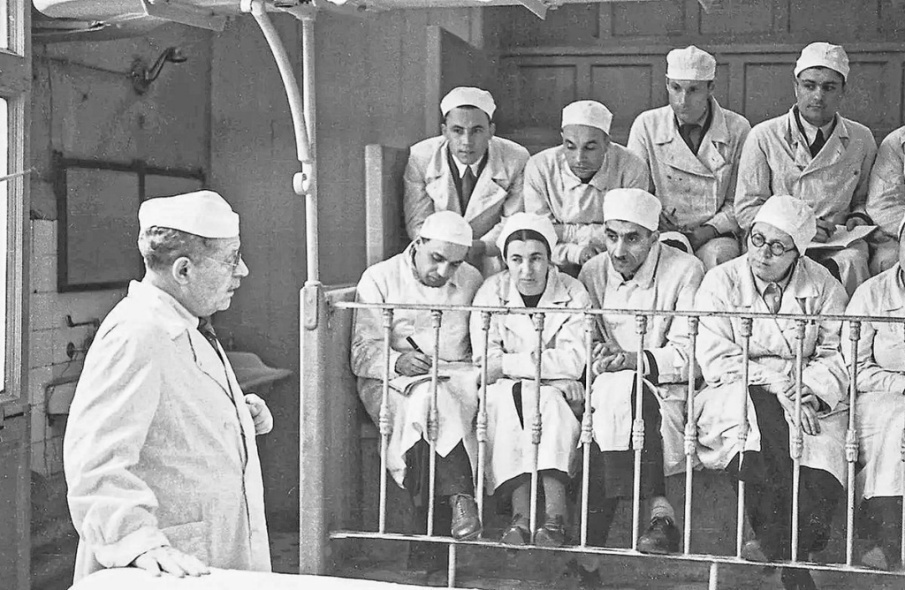
During the Soviet-Finnish war, Nikolay Burdenko, who was sixty-four years of age at the time, again set out for the front and spent the entire period of the war in the theatre of military operations, directing the organisation of surgical care. It was therefore only natural that, in 1941, he was appointed Chief Surgeon of the Red Army. By July 1941, he was already at the front. Over the years of the Great Patriotic War, he personally performed several thousand operations in regimental and divisional medical battalions. During the war, he suffered three strokes, was concussed during an air raid, yet each time, after recovering, he returned once more to his work as a military surgeon.
It was said of him that even during an air raid he refused to take cover in a bomb shelter, replying: “The wounded cannot hide. A doctor's place is beside the patient's bed.”The achievements of Soviet military medicine during the war were extraordinary. Medical personnel succeeded in returning 72.3 per cent of wounded servicemen and 90.6 per cent of sick soldiers to active duty – approximately eighteen million people in total. Moreover, during the years of the war in the USSR, thanks to the efforts of medical workers, not a single outbreak of infectious disease, let alone an epidemic, was recorded.
In December 1944, his long-standing dream was fulfilled: the Academy of Medical Sciences was opened in the Soviet Union, with Burdenko at its head. Alongside this, he wrote scholarly works devoted to effective methods for the surgical treatment of combat trauma and drew up detailed instructions for the prevention and treatment of shock following wounding. He was among the first to employ the newly developed antibiotics: in order to test them, Burdenko organised a medical team and, as part of it, set off for the front. Soon, at his insistence, penicillin came to be used in all military hospitals. He discovered an effective means of treating purulent complications arising from surgery for head wounds. It may be said that Nikolay Burdenko founded his own school of experimental surgery. A whole series of methods of performing surgical operations bear the name of Burdenko as their discoverer.
He continued to work almost until the final days of his life, although by that time he had suffered three strokes, had lost the power of speech and his hearing, and could scarcely move. Yet he still completed a major paper on gunshot wounds for the All-Union Congress of Surgeons in October 1946, at which he was elected Honorary Chairman. The article would be read from the rostrum in his stead by his student. A month later, Nikolay Burdenko passed away.
It was said of him that even during an air raid he refused to take cover in a bomb shelter, replying: “The wounded cannot hide. A doctor's place is beside the patient's bed.”The achievements of Soviet military medicine during the war were extraordinary. Medical personnel succeeded in returning 72.3 per cent of wounded servicemen and 90.6 per cent of sick soldiers to active duty – approximately eighteen million people in total. Moreover, during the years of the war in the USSR, thanks to the efforts of medical workers, not a single outbreak of infectious disease, let alone an epidemic, was recorded.
In December 1944, his long-standing dream was fulfilled: the Academy of Medical Sciences was opened in the Soviet Union, with Burdenko at its head. Alongside this, he wrote scholarly works devoted to effective methods for the surgical treatment of combat trauma and drew up detailed instructions for the prevention and treatment of shock following wounding. He was among the first to employ the newly developed antibiotics: in order to test them, Burdenko organised a medical team and, as part of it, set off for the front. Soon, at his insistence, penicillin came to be used in all military hospitals. He discovered an effective means of treating purulent complications arising from surgery for head wounds. It may be said that Nikolay Burdenko founded his own school of experimental surgery. A whole series of methods of performing surgical operations bear the name of Burdenko as their discoverer.
He continued to work almost until the final days of his life, although by that time he had suffered three strokes, had lost the power of speech and his hearing, and could scarcely move. Yet he still completed a major paper on gunshot wounds for the All-Union Congress of Surgeons in October 1946, at which he was elected Honorary Chairman. The article would be read from the rostrum in his stead by his student. A month later, Nikolay Burdenko passed away.