Polina Kvitnykh, a native of Krasnoyarsk, teaches Russian to children and teenagers in Niger. Her students can no longer imagine their lives without learning new Russian words, playing with matryoshka dolls, and singing cheerful songs from Soviet cartoons, which are played in the Russian House during breaks.
Polina Kvitnykh, an employee of the Centre for Public Diplomacy, told “Russkiy Mir” what motivates young people in Niger to study Russian, how much they know about Russia, and which cities and regions they dream of visiting. She also noted the huge demand for Russian education and Russian language courses among the youth.
"I came to teaching gradually"
– Polina, how did you find yourself in Niger?
– It was a fairly classic path: I found a vacancy, went through the interview process, and that’s how my African adventure began. But it turned out to be far more profound - the country, the people, and the work itself have been a true discovery for me.
– How did you become a teacher? How did you choose the profession?
– My story started back at university. In my fourth year, I began teaching English to children at a private school. My love of teaching had emerged even earlier: I often helped my nephews with their schoolwork, and I genuinely enjoyed it. It’s worth noting that we are employees of the Centre for People’s Diplomacy, not trained teachers. However, last November my colleagues and I completed advanced training courses in teaching Russian as a foreign language. One could say that I came to this role gradually, through a combination of circumstances and my own personal interest.
Polina Kvitnykh, an employee of the Centre for Public Diplomacy, told “Russkiy Mir” what motivates young people in Niger to study Russian, how much they know about Russia, and which cities and regions they dream of visiting. She also noted the huge demand for Russian education and Russian language courses among the youth.
"I came to teaching gradually"
– Polina, how did you find yourself in Niger?
– It was a fairly classic path: I found a vacancy, went through the interview process, and that’s how my African adventure began. But it turned out to be far more profound - the country, the people, and the work itself have been a true discovery for me.
– How did you become a teacher? How did you choose the profession?
– My story started back at university. In my fourth year, I began teaching English to children at a private school. My love of teaching had emerged even earlier: I often helped my nephews with their schoolwork, and I genuinely enjoyed it. It’s worth noting that we are employees of the Centre for People’s Diplomacy, not trained teachers. However, last November my colleagues and I completed advanced training courses in teaching Russian as a foreign language. One could say that I came to this role gradually, through a combination of circumstances and my own personal interest.
– Was it exciting going there for the first time? What were you most worried about?
– Yes, it was very exciting. I had no real idea what to expect. My biggest concerns were the climate, the intense heat and the sun's radiation, especially since I'm from Siberia. However, when we arrived, it was raining, and there was a heavy thunderstorm that night.
Having lived here for almost a year, I can say that I’m absolutely delighted with the climate. April and May, the peak of the heat, are my favourite months because there are no insects, especially malarial mosquitoes. Right now, the rainy season has begun and will last until September. From September to March is probably the most comfortable time for people from our part of the world, as there is no intense heat, no rain, and no dust storms – temperatures rise to around 30 degrees at most. And, of course, it’s essential not to forget sunscreen – you need to use it all the time.
"People in Niger are open, calm – it's their mentality"
– Russia is probably also seen as an exotic country for Niger. What motivates its residents to learn Russian?
– In my observation, any information about Russia is received with delight by the locals - for them, it feels like another world. In this regard, we try to immerse them in our culture, traditions and history as much as possible. For example, at our Russian House we organise lectures about Russia and events dedicated to Russian holidays. We also prepare programmes on local national radio that focus on Russia.
Of course, our Russian language courses are the main source, where we also share interesting things about Russia with our students from time to time. We have our own internal social media channels where we post stories about Russia for people in Niger. I think this is an excellent way to introduce foreigners to our country in a gentle and engaging manner.
These initiatives developed gradually, as our friends and students would ask us various questions about Russia, and we responded to their requests. We always welcome everyone - the doors of our office are open, and all our events are free of charge. Those who come are genuinely interested, so we always receive good feedback and keep moving forward.
– Yes, it was very exciting. I had no real idea what to expect. My biggest concerns were the climate, the intense heat and the sun's radiation, especially since I'm from Siberia. However, when we arrived, it was raining, and there was a heavy thunderstorm that night.
Having lived here for almost a year, I can say that I’m absolutely delighted with the climate. April and May, the peak of the heat, are my favourite months because there are no insects, especially malarial mosquitoes. Right now, the rainy season has begun and will last until September. From September to March is probably the most comfortable time for people from our part of the world, as there is no intense heat, no rain, and no dust storms – temperatures rise to around 30 degrees at most. And, of course, it’s essential not to forget sunscreen – you need to use it all the time.
"People in Niger are open, calm – it's their mentality"
– Russia is probably also seen as an exotic country for Niger. What motivates its residents to learn Russian?
– In my observation, any information about Russia is received with delight by the locals - for them, it feels like another world. In this regard, we try to immerse them in our culture, traditions and history as much as possible. For example, at our Russian House we organise lectures about Russia and events dedicated to Russian holidays. We also prepare programmes on local national radio that focus on Russia.
Of course, our Russian language courses are the main source, where we also share interesting things about Russia with our students from time to time. We have our own internal social media channels where we post stories about Russia for people in Niger. I think this is an excellent way to introduce foreigners to our country in a gentle and engaging manner.
These initiatives developed gradually, as our friends and students would ask us various questions about Russia, and we responded to their requests. We always welcome everyone - the doors of our office are open, and all our events are free of charge. Those who come are genuinely interested, so we always receive good feedback and keep moving forward.
– How did you get the children for your classes?
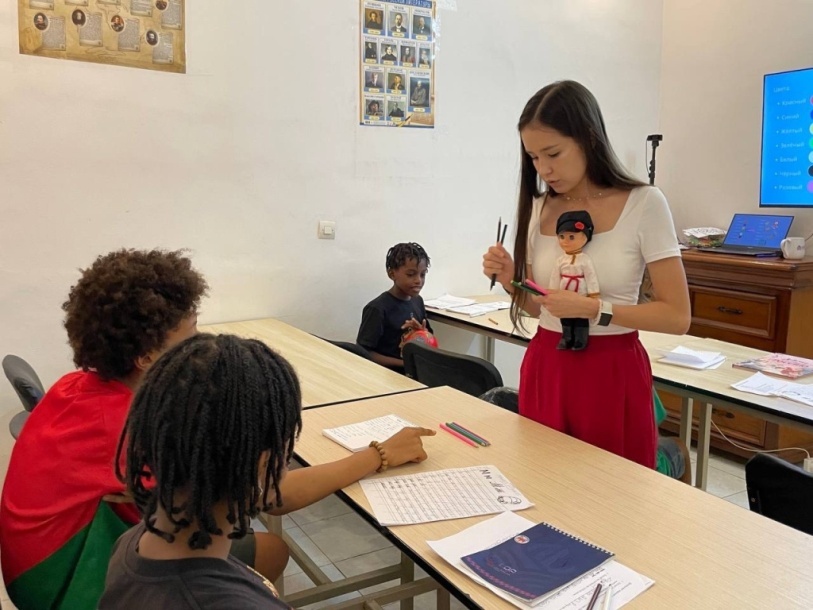
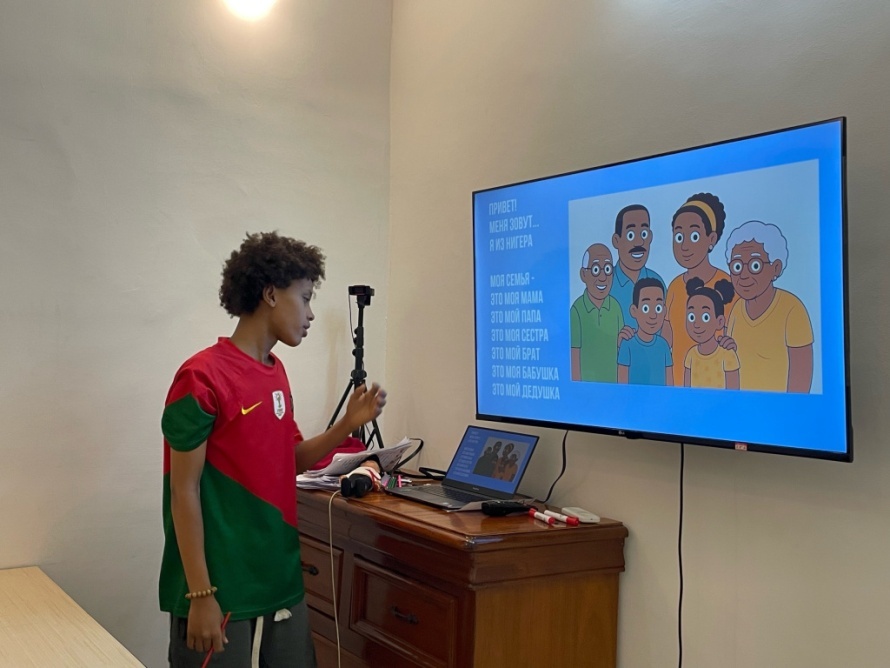
– Getting the children, as well as setting up the children’s groups came about at the request of our local friends. Since I already had experience working with young children, I was the one who started teaching them. I was genuinely curious to see how the little ones would perceive a foreign language and whether they would find it interesting. It’s worth noting that in Niger the main national language is Hausa, but the official languages also include Zarma, Tamasheq, Kanuri, Fulani, Arabic and other local languages. French has received the status of a working language this year. As a result, almost everyone speaks at least two or three languages. The children I teach already know English as well, so learning new languages feels quite natural to them. They study Russian with great interest.
– What age are the children? Was it difficult to build a rapport with them?
– My kids are between 8 and 14 years old. I really love children, and from the very second lesson, when they arrived, they would run up to give me a hug. People here are very open and calm – that’s their mentality. And at a young age, they are especially affectionate. The children reach out to you themselves, hug you, and love holding your hand. Interacting with them comes easily. Discipline in the classroom is perfect – I don't waste time trying to settle anyone down. The lesson runs according to plan, and any teacher will understand how valuable that is. After playing games, the children can calmly sit down and complete a written task. In short, my students are golden. I have nothing to complain about, and that's a blessing.
The future belongs to Africa
– How do the lessons run?
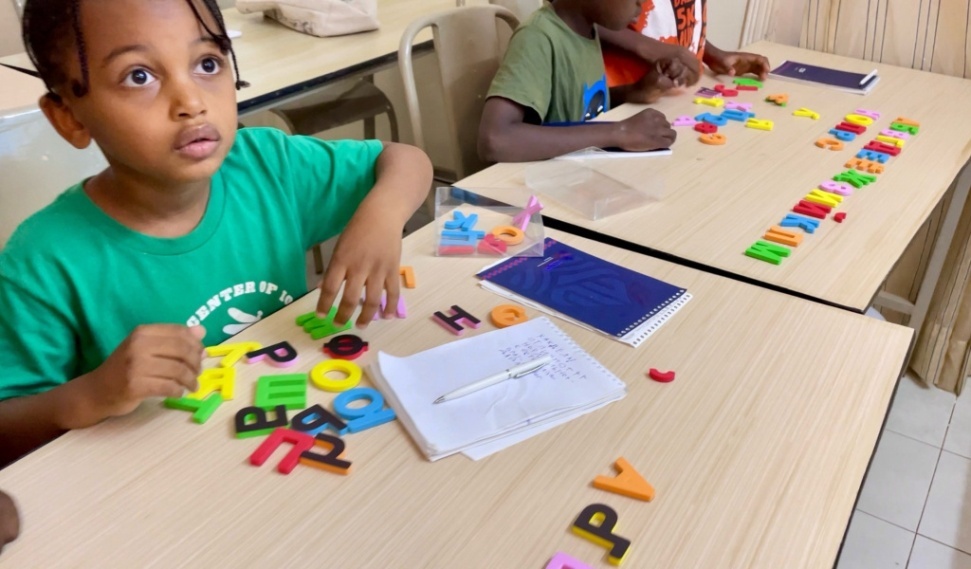
– Every lesson starts with a warm-up. We revise key Russian phrases through games: “I know”, “I’m ready”, “I’m listening”, and so on. It’s a gentle way to help the children start speaking quickly and build up a foundation of simple expressions. Before launching the courses, I created a programme based on Russian-as-a-foreign-language textbooks and my own experience. Using the programme, I plan my lessons and introduce various game-based activities: individual, group, digital, and written tasks. I see what works best and refine the lesson plan from one class to the next.
– How do the students take in the material? Are there any difficulties?
– Surprisingly, they absorb it very easily so far. We’re now in the third month of lessons, and we haven’t encountered any particularly difficult topics yet. But that’s what makes it interesting - when they do come up, it will be a challenge for me as a teacher. Time will tell.
– Getting the children, as well as setting up the children’s groups came about at the request of our local friends. Since I already had experience working with young children, I was the one who started teaching them. I was genuinely curious to see how the little ones would perceive a foreign language and whether they would find it interesting. It’s worth noting that in Niger the main national language is Hausa, but the official languages also include Zarma, Tamasheq, Kanuri, Fulani, Arabic and other local languages. French has received the status of a working language this year. As a result, almost everyone speaks at least two or three languages. The children I teach already know English as well, so learning new languages feels quite natural to them. They study Russian with great interest.
– What age are the children? Was it difficult to build a rapport with them?
– My kids are between 8 and 14 years old. I really love children, and from the very second lesson, when they arrived, they would run up to give me a hug. People here are very open and calm – that’s their mentality. And at a young age, they are especially affectionate. The children reach out to you themselves, hug you, and love holding your hand. Interacting with them comes easily. Discipline in the classroom is perfect – I don't waste time trying to settle anyone down. The lesson runs according to plan, and any teacher will understand how valuable that is. After playing games, the children can calmly sit down and complete a written task. In short, my students are golden. I have nothing to complain about, and that's a blessing.
The future belongs to Africa
– How do the lessons run?
– Every lesson starts with a warm-up. We revise key Russian phrases through games: “I know”, “I’m ready”, “I’m listening”, and so on. It’s a gentle way to help the children start speaking quickly and build up a foundation of simple expressions. Before launching the courses, I created a programme based on Russian-as-a-foreign-language textbooks and my own experience. Using the programme, I plan my lessons and introduce various game-based activities: individual, group, digital, and written tasks. I see what works best and refine the lesson plan from one class to the next.
– How do the students take in the material? Are there any difficulties?
– Surprisingly, they absorb it very easily so far. We’re now in the third month of lessons, and we haven’t encountered any particularly difficult topics yet. But that’s what makes it interesting - when they do come up, it will be a challenge for me as a teacher. Time will tell.
– What do the children know about Russia and Russian culture?
– What do they know about Russia? They know that it is the largest country in the world and that many different peoples live there. We had a lesson about cities, and judging by a survey we did, the places the children would most like to visit are Saint Petersburg, Kazan, Sochi and Kamchatka. They are getting to know Russia with zeal and interest.
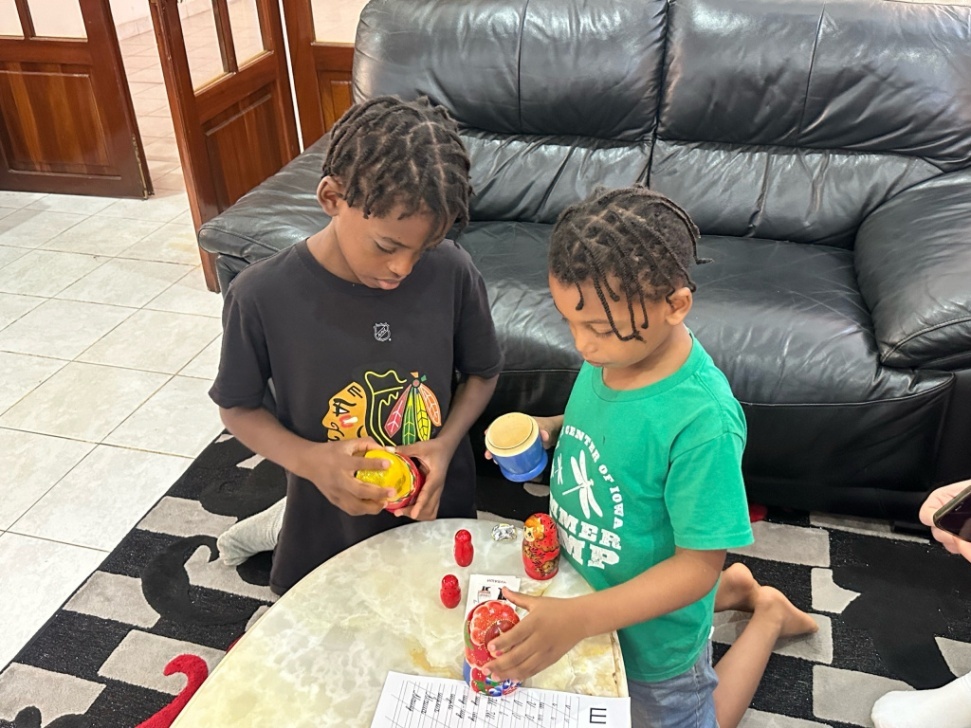
They are delighted by our matryoshka dolls. We have several in the office, and before every lesson the children take them apart and play with them. I put on Soviet children’s songs from cartoons during breaks for them, because I believe they have a positive effect on the children’s emotional state. The speech is clear, the pace is not too fast, and the melody is pleasant. One of their favourites is the song about smile from The Little Raccoon.
– What do you see as the main goal of your work?
– My thesis was focused on Africa. Right from my first year at university, I decided to concentrate on the continent and gradually studied it, narrowing down my research area. Even then, I had the impression that the future belongs to Africa. Of course, it will take time. After working here, I have realised that there are still factors slowing down development, both across the continent as a whole and in individual countries. Nevertheless, it is within our power to make a small contribution to the development of Niger.
– Development of a country depends on specialists, and specialists come from education - and I provide education. In our lessons we don’t only study the language; from time to time, I give the children information about how the world is organized. We have a world map, we study other countries as well, and I show them different cultures. I think this greatly broadens their horizons. We do this with love for the world, with respect and understanding. My goal is to make them fall in love with learning. Live and learn. Education has always been very important - one should always continue learning, be hungry for knowledge, and find what interests them.
"The first thing we hear from the locals is 'Putin'."
– Do you meet the parents of your students, interact with them at all?
– We have excellent relations with the parents because they are our partners and I have been in touch with them for a long time. The children attend almost all our celebrations - such as Cosmonautics Day, Victory Day, Russia Day, etc. We also play Russian cartoons specially for them, create children’s corners where they draw themed pictures and do jigsaw puzzles.
– What do they know about Russia? They know that it is the largest country in the world and that many different peoples live there. We had a lesson about cities, and judging by a survey we did, the places the children would most like to visit are Saint Petersburg, Kazan, Sochi and Kamchatka. They are getting to know Russia with zeal and interest.
They are delighted by our matryoshka dolls. We have several in the office, and before every lesson the children take them apart and play with them. I put on Soviet children’s songs from cartoons during breaks for them, because I believe they have a positive effect on the children’s emotional state. The speech is clear, the pace is not too fast, and the melody is pleasant. One of their favourites is the song about smile from The Little Raccoon.
– What do you see as the main goal of your work?
– My thesis was focused on Africa. Right from my first year at university, I decided to concentrate on the continent and gradually studied it, narrowing down my research area. Even then, I had the impression that the future belongs to Africa. Of course, it will take time. After working here, I have realised that there are still factors slowing down development, both across the continent as a whole and in individual countries. Nevertheless, it is within our power to make a small contribution to the development of Niger.
– Development of a country depends on specialists, and specialists come from education - and I provide education. In our lessons we don’t only study the language; from time to time, I give the children information about how the world is organized. We have a world map, we study other countries as well, and I show them different cultures. I think this greatly broadens their horizons. We do this with love for the world, with respect and understanding. My goal is to make them fall in love with learning. Live and learn. Education has always been very important - one should always continue learning, be hungry for knowledge, and find what interests them.
"The first thing we hear from the locals is 'Putin'."
– Do you meet the parents of your students, interact with them at all?
– We have excellent relations with the parents because they are our partners and I have been in touch with them for a long time. The children attend almost all our celebrations - such as Cosmonautics Day, Victory Day, Russia Day, etc. We also play Russian cartoons specially for them, create children’s corners where they draw themed pictures and do jigsaw puzzles.
– How do local people in Niger feel about Russia and Russians?
– When they find out we are from Russia, the first thing we hear is “Putin”. Our country is viewed very positively here - they treat us with respect and interest. People often come to us with requests for cooperation. So, I put it this way: Russia is loved, and we are grateful for that.
– Is there any interest in Russian education among young people?
– The interest is enormous. Our state allocates a large number of quotas for foreigners every year. We help students register on the platforms where they can apply for scholarships to study at Russian universities. When we launched the preparatory courses at Abdou Moumouni University, around 200-250 people came. And afterwards, many more kept coming with the desire to enrol on the preparatory faculty, but we couldn't physically accept everyone at that time.
– When they find out we are from Russia, the first thing we hear is “Putin”. Our country is viewed very positively here - they treat us with respect and interest. People often come to us with requests for cooperation. So, I put it this way: Russia is loved, and we are grateful for that.
– Is there any interest in Russian education among young people?
– The interest is enormous. Our state allocates a large number of quotas for foreigners every year. We help students register on the platforms where they can apply for scholarships to study at Russian universities. When we launched the preparatory courses at Abdou Moumouni University, around 200-250 people came. And afterwards, many more kept coming with the desire to enrol on the preparatory faculty, but we couldn't physically accept everyone at that time.
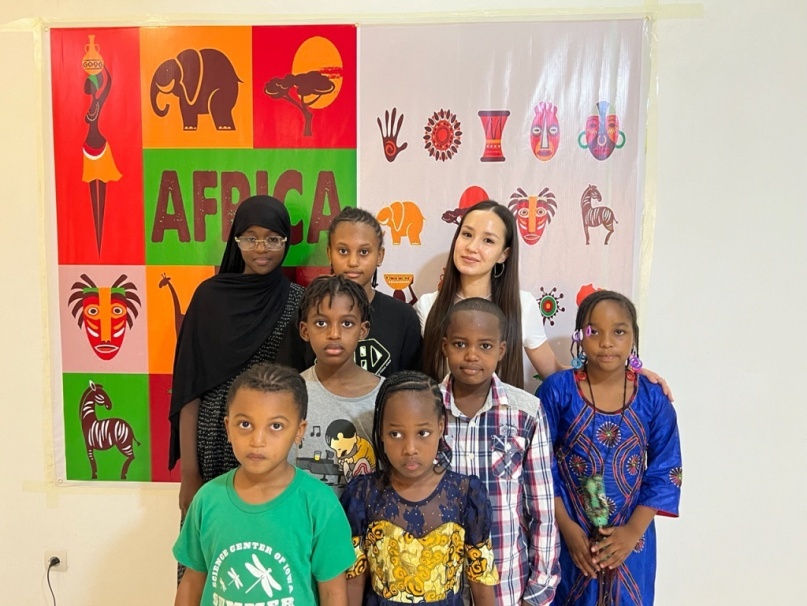
We have additionally launched Russian language courses at our office, and we are currently about to open another 4-5 groups. Many people see this as a great opportunity, so those who are already studying work hard, while those on the waiting list eagerly await the start of classes. We will continue to help students with admission to Russian universities in the next academic year. We (and I personally) see this as both our responsibility and our mission. The country needs specialists in various fields, and our students intend to return home after their studies and work for the benefit of Niger.
– How is Russian culture represented in the country?
– If we look beyond our Russian House, then Russian culture as such is almost non-existent outside it. Local people listen to news about Russia, but I have not noticed any theatrical performances based on Russian classics or books by Russian writers in the shops. It’s possible they simply haven’t caught my eye. Nevertheless, we have a field of work ahead of us, and we will gradually fill this space as well.
– How is Russian culture represented in the country?
– If we look beyond our Russian House, then Russian culture as such is almost non-existent outside it. Local people listen to news about Russia, but I have not noticed any theatrical performances based on Russian classics or books by Russian writers in the shops. It’s possible they simply haven’t caught my eye. Nevertheless, we have a field of work ahead of us, and we will gradually fill this space as well.