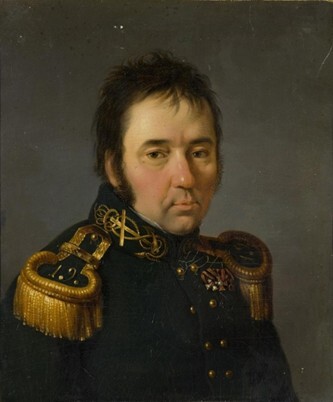
Two hundred and fifty years ago, in the remote Ryazan village of Gulynki, a boy was born who was destined to become a true legend of the Russian navy. The history of Russia holds no shortage of celebrated seafarers, yet the naval service to the fatherland and the adventures of Vasily Mikhailovich Golovnin have always aroused a particular interest.
A Midshipman from Ryazan
The epoch in which Golovnin lived was an age of sail and the romance of distant voyages, but also of cruel geopolitical games. And the story of his life is akin to an adventure novel. The beginning of the nineteenth century was marked by the Napoleonic Wars, the rivalry between Russia and Britain, and the collapse of old empires. At the age of thirteen, Vasily was left a complete orphan. His relatives, unwilling to burden themselves with the care of a noble offspring, sent the boy to the Naval Cadet Corps.
At just fourteen, Midshipman Golovnin received his baptism of fire in battles against the Swedes near Krasnaya Gorka and Vyborg. His youth did not prevent him from displaying the composure of a mature man. Yet Golovnin’s real schooling began in 1802, when he was sent to Great Britain as one of the most promising young officers for further training. For four years he sailed the seas with British squadrons, including under the flag of the legendary Admiral Horatio Nelson. He took part in engagements against the French in the West Indies and absorbed advanced naval experience. It was there that his mathematical cast of mind and his passion for the exact sciences fully developed, later resulting in the publication of ‘Military Naval Signals’, a book which remained an essential handbook for Russian officers for a quarter of a century.
The escape on the ‘Diana’ and captivity among the samurai
Golovnin’s very first independent command turned into a truly dramatic story worthy of a detective novel. In 1806, he was given command of the sloop Diana. The mission was ambitious: to circumnavigate the globe and explore the Pacific Ocean. However, in 1807, when the ship entered the British Cape Colony in South Africa, it emerged that war had broken out between Russia and Britain. The ‘Diana’ was immediately interned. Golovnin and his crew spent over a year in captivity, awaiting the resolution of their fate. It was then that the iron core of Golovnin’s character revealed itself. After the British refused permission for the ship to put to sea, he decided to go for broke. On 16th May 1809, taking advantage of stormy weather and the fact that the sentries had taken shelter from the rain, the crew of the ‘Diana’ cut the cables, hoisted the sails, and quite literally bolted out of the bay before the British could come to their senses. The escape was so daring that it became the talk of Europe.
A Midshipman from Ryazan
The epoch in which Golovnin lived was an age of sail and the romance of distant voyages, but also of cruel geopolitical games. And the story of his life is akin to an adventure novel. The beginning of the nineteenth century was marked by the Napoleonic Wars, the rivalry between Russia and Britain, and the collapse of old empires. At the age of thirteen, Vasily was left a complete orphan. His relatives, unwilling to burden themselves with the care of a noble offspring, sent the boy to the Naval Cadet Corps.
At just fourteen, Midshipman Golovnin received his baptism of fire in battles against the Swedes near Krasnaya Gorka and Vyborg. His youth did not prevent him from displaying the composure of a mature man. Yet Golovnin’s real schooling began in 1802, when he was sent to Great Britain as one of the most promising young officers for further training. For four years he sailed the seas with British squadrons, including under the flag of the legendary Admiral Horatio Nelson. He took part in engagements against the French in the West Indies and absorbed advanced naval experience. It was there that his mathematical cast of mind and his passion for the exact sciences fully developed, later resulting in the publication of ‘Military Naval Signals’, a book which remained an essential handbook for Russian officers for a quarter of a century.
The escape on the ‘Diana’ and captivity among the samurai
Golovnin’s very first independent command turned into a truly dramatic story worthy of a detective novel. In 1806, he was given command of the sloop Diana. The mission was ambitious: to circumnavigate the globe and explore the Pacific Ocean. However, in 1807, when the ship entered the British Cape Colony in South Africa, it emerged that war had broken out between Russia and Britain. The ‘Diana’ was immediately interned. Golovnin and his crew spent over a year in captivity, awaiting the resolution of their fate. It was then that the iron core of Golovnin’s character revealed itself. After the British refused permission for the ship to put to sea, he decided to go for broke. On 16th May 1809, taking advantage of stormy weather and the fact that the sentries had taken shelter from the rain, the crew of the ‘Diana’ cut the cables, hoisted the sails, and quite literally bolted out of the bay before the British could come to their senses. The escape was so daring that it became the talk of Europe.
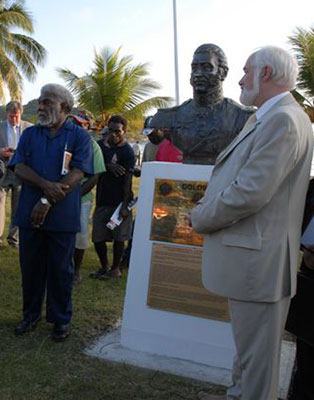
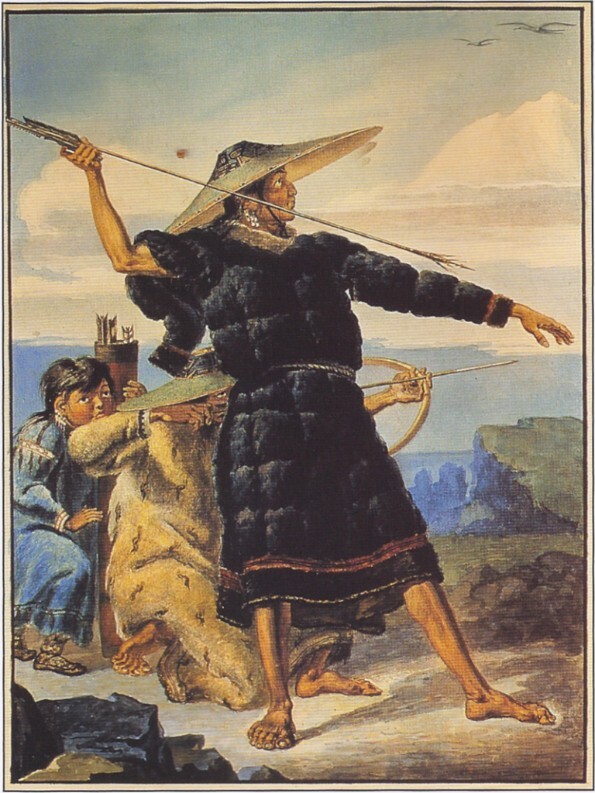
Yet the ‘Diana’ did not immediately set course for Kamchatka. On 25th July 1809, after long weeks of stormy passage, the exhausted crew finally sighted land. It was the island of Tanna in the New Hebrides archipelago (today the Republic of Vanuatu). Golovnin resolved to replenish his supplies of fresh water and provisions there. The Russian sailors spent a mere ten days in this tropical bay, but that was enough to establish remarkably warm relations with the local inhabitants. Exactly two hundred years later, in 2009, the grateful people of Vanuatu, with the support of the Russkiy Mir Foundation, erected a monument to the Russian seafarer in their capital, Port Vila. The bronze bust of Vasily Golovnin still stands today in the most picturesque part of the waterfront, gazing out over the ocean by which he once came to their ancestors.
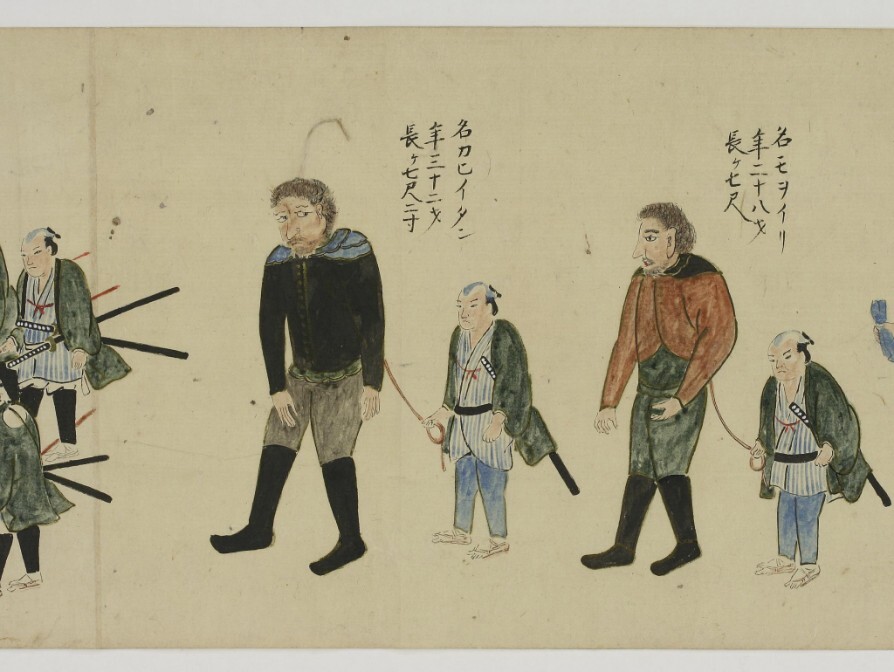
But his greatest ordeal still lay ahead. In 1811, while charting the Kuril Islands, Golovnin landed on the island of Kunashir. There he (together with two officers and four sailors) was treacherously captured by Japanese samurai. The reason was political: earlier, the Russian seafarers Khvostov and Davydov had carried out unauthorised attacks on Japanese settlements, and the Japanese were seeking revenge. Thus began a lengthy captivity of over two years. In a Japanese prison, Golovnin did not lose heart. A man of the Enlightenment era, he began studying the language, customs, and daily life of this closed country.
He kept a diary in which he meticulously described everything: from the samurai laws to the methods of cooking rice. These notes were later published as a separate book entitled ‘Narrative of My Captivity in Japan, During the Years 1811, 1812, and 1813, by Captain Vasily Golovnin of the Imperial Russian Navy’. The work caused a sensation in both Europe and Russia, becoming one of the first reliable sources on Japan. Remarkably, it was not a military assault that saved Golovnin, but friendship and diplomacy. His fellow officer, Captain Pyotr Rikord, formed a friendship with the influential Japanese merchant Takadaya Kahei, who managed to convince the samurai government that the Russians could be trusted. His release was secured, and this incident became a unique example of 'people's diplomacy'.
But his greatest ordeal still lay ahead. In 1811, while charting the Kuril Islands, Golovnin landed on the island of Kunashir. There he (together with two officers and four sailors) was treacherously captured by Japanese samurai. The reason was political: earlier, the Russian seafarers Khvostov and Davydov had carried out unauthorised attacks on Japanese settlements, and the Japanese were seeking revenge. Thus began a lengthy captivity of over two years. In a Japanese prison, Golovnin did not lose heart. A man of the Enlightenment era, he began studying the language, customs, and daily life of this closed country.
He kept a diary in which he meticulously described everything: from the samurai laws to the methods of cooking rice. These notes were later published as a separate book entitled ‘Narrative of My Captivity in Japan, During the Years 1811, 1812, and 1813, by Captain Vasily Golovnin of the Imperial Russian Navy’. The work caused a sensation in both Europe and Russia, becoming one of the first reliable sources on Japan. Remarkably, it was not a military assault that saved Golovnin, but friendship and diplomacy. His fellow officer, Captain Pyotr Rikord, formed a friendship with the influential Japanese merchant Takadaya Kahei, who managed to convince the samurai government that the Russians could be trusted. His release was secured, and this incident became a unique example of 'people's diplomacy'.
The circumnavigation of the ‘Kamchatka’ and a school for seafarers
Having returned to his homeland as a national hero, Golovnin did not rest on his laurels. In 1817 and 1819, he led another circumnavigation aboard the sloop ‘Kamchatka’. The voyage became a crowning hour not only for Golovnin himself, but also for an entire generation of future naval luminaries.
To serve under Golovnin’s command was considered the greatest of good fortune. On board the ‘Kamchatka’, several future giants of the Russian navy received their training: Ferdinand Wrangel (after whom Wrangel Island in the Arctic was later named), Fyodor Litke (future founder of the Russian Geographical Society), and Fyodor Matyushkin (Pushkin’s close friend from the Lyceum). Golovnin possessed the ability not simply to command, but to teach: he gave the young officers freedom in their investigations and demanded of them not blind obedience, but thoughtful work. In this way, a tradition of Russian seafaring was formed in which the personal example of the commander and a thirst for knowledge were valued above the blind following of regulations. Fyodor Litke, who later became an admiral and founder of the Russian Geographical Society, recalled his mentor in the following words: 'Vasily Mikhailovich was an extraordinary man… He possessed a broad and penetrating mind, tireless energy, and a firmness of character that nothing could shake.'
Having returned to his homeland as a national hero, Golovnin did not rest on his laurels. In 1817 and 1819, he led another circumnavigation aboard the sloop ‘Kamchatka’. The voyage became a crowning hour not only for Golovnin himself, but also for an entire generation of future naval luminaries.
To serve under Golovnin’s command was considered the greatest of good fortune. On board the ‘Kamchatka’, several future giants of the Russian navy received their training: Ferdinand Wrangel (after whom Wrangel Island in the Arctic was later named), Fyodor Litke (future founder of the Russian Geographical Society), and Fyodor Matyushkin (Pushkin’s close friend from the Lyceum). Golovnin possessed the ability not simply to command, but to teach: he gave the young officers freedom in their investigations and demanded of them not blind obedience, but thoughtful work. In this way, a tradition of Russian seafaring was formed in which the personal example of the commander and a thirst for knowledge were valued above the blind following of regulations. Fyodor Litke, who later became an admiral and founder of the Russian Geographical Society, recalled his mentor in the following words: 'Vasily Mikhailovich was an extraordinary man… He possessed a broad and penetrating mind, tireless energy, and a firmness of character that nothing could shake.'
Builder of Russia’s first steamships
Few people realise that this desperate traveler was also an outstanding administrator. From 1823, he held the post of Quartermaster General of the Navy. In this role, Golovnin made a revolution. Later, after receiving the rank of Vice-Admiral in 1830, he was in de facto command of all Russian shipbuilding. Golovnin personally supervised the construction of over two hundred vessels, including the first ten steamships built in Russia. He was convinced that the future belonged to steam power and promoted its adoption despite the conservatism of many admirals.
Under his leadership, shipyards were modernised, working conditions for labourers were improved, and a corps of naval engineers was established. His official memoranda on the state of the fleet were so honest and critical that people feared publishing them during his lifetime – they struck too painfully at bureaucratic arrogance and embezzlement. “Golovnin could not tolerate falsehood or pretence; he demanded clarity of thought and precision in action from his subordinates,” recalled his apprentice, the famous polar explorer Ferdinand Wrangel.
A man of honour
Golovnin was a man of remarkable destiny and rare literary talent. His memoirs read like a novel: they are free from official pomposity, yet filled with lively intelligence, irony, and exceptional power of observation. He was among the first to note a paradoxical feature of the Russian national character: when a Russian man finds himself in hardship, he is capable of extraordinary endurance, yet when he suddenly comes into wealth, he often loses his head.
The greatest battle of his life was lost not at sea, but on land. On 11th July (29th June, Old Style) 1831, Vasily Mikhailovich died in St Petersburg during the cholera epidemic. He was only fifty-five years old. The man who had survived the storms of Cape Horn, British guns, and captivity among the samurai fell victim to an invisible disease.
Today, Golovnin’s name is borne by capes, a strait between the Kuril Islands, a mountain on Novaya Zemlya, an active volcano on Kunashir Island, and a boulevard in St Petersburg. Yet his greatest legacy is his character. Golovnin’s life serves as a reminder that even in a seemingly hopeless situation – be it British captivity or a Japanese prison – a person is capable of preserving dignity if they act wisely and place trust in their comrades.
Few people realise that this desperate traveler was also an outstanding administrator. From 1823, he held the post of Quartermaster General of the Navy. In this role, Golovnin made a revolution. Later, after receiving the rank of Vice-Admiral in 1830, he was in de facto command of all Russian shipbuilding. Golovnin personally supervised the construction of over two hundred vessels, including the first ten steamships built in Russia. He was convinced that the future belonged to steam power and promoted its adoption despite the conservatism of many admirals.
Under his leadership, shipyards were modernised, working conditions for labourers were improved, and a corps of naval engineers was established. His official memoranda on the state of the fleet were so honest and critical that people feared publishing them during his lifetime – they struck too painfully at bureaucratic arrogance and embezzlement. “Golovnin could not tolerate falsehood or pretence; he demanded clarity of thought and precision in action from his subordinates,” recalled his apprentice, the famous polar explorer Ferdinand Wrangel.
A man of honour
Golovnin was a man of remarkable destiny and rare literary talent. His memoirs read like a novel: they are free from official pomposity, yet filled with lively intelligence, irony, and exceptional power of observation. He was among the first to note a paradoxical feature of the Russian national character: when a Russian man finds himself in hardship, he is capable of extraordinary endurance, yet when he suddenly comes into wealth, he often loses his head.
The greatest battle of his life was lost not at sea, but on land. On 11th July (29th June, Old Style) 1831, Vasily Mikhailovich died in St Petersburg during the cholera epidemic. He was only fifty-five years old. The man who had survived the storms of Cape Horn, British guns, and captivity among the samurai fell victim to an invisible disease.
Today, Golovnin’s name is borne by capes, a strait between the Kuril Islands, a mountain on Novaya Zemlya, an active volcano on Kunashir Island, and a boulevard in St Petersburg. Yet his greatest legacy is his character. Golovnin’s life serves as a reminder that even in a seemingly hopeless situation – be it British captivity or a Japanese prison – a person is capable of preserving dignity if they act wisely and place trust in their comrades.